

Gas Shielded Flux Cored Wire: High-Performance Welding Consumable for Industrial Fabrication
Release time:
2026-06-18
OEM Gas Shielded Flux Cored Wire factory supplies welding consumables for industrial worldwide OEMs
Product Overview
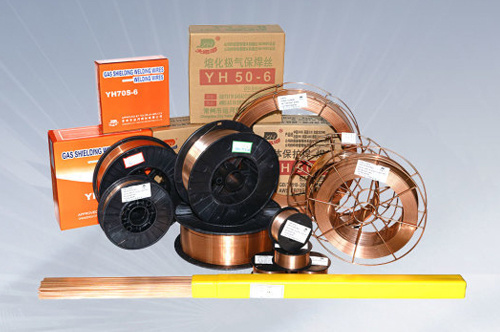
Gas Shielded Flux Cored Wire is a widely used welding consumable designed for high-efficiency semi-automatic and automatic welding processes. It combines the advantages of solid wire and flux-coated electrodes, providing stable arc performance, strong weld penetration, and excellent deposition efficiency. During welding, an external shielding gas (such as CO₂ or argon-based mixtures) protects the molten pool from atmospheric contamination, ensuring high-quality weld formation.
This type of welding wire is commonly used in structural steel fabrication, shipbuilding, heavy machinery manufacturing, bridge construction, pressure vessels, and pipeline welding. Its ability to maintain consistent arc stability and high productivity makes it a preferred choice in industrial welding applications where both strength and efficiency are critical.
Structural Composition and Working Principle
Gas shielded flux cored wire is composed of a steel sheath filled with fluxing agents and alloying materials. The outer metal casing provides mechanical strength and electrical conductivity, while the internal flux core contributes to metallurgical reactions during welding.
When the wire is fed through a welding torch, an electric arc is generated between the wire and the base metal. The flux inside the wire decomposes under high temperature, producing shielding gases and slag. The shielding gas protects the molten weld pool, while the slag covers the cooling weld bead to prevent oxidation and improve bead formation.
Depending on formulation, flux cored wires can be designed for all-position welding, high deposition welding, or low spatter performance. The flexibility of composition allows manufacturers to tailor wires for specific steel grades and welding environments.
Key Features and Advantages
Gas shielded flux cored wire offers multiple technical and operational advantages:
- High deposition rate, improving welding productivity
- Stable arc performance with minimal spatter generation
- Strong weld penetration suitable for thick materials
- Excellent mechanical properties of weld metal
- Reduced post-weld cleaning due to controlled slag formation
- Suitable for both indoor and outdoor welding applications
- High adaptability to different shielding gas compositions
Compared to traditional solid welding wire, flux cored wire significantly improves welding efficiency while maintaining or enhancing joint quality.

Welding Performance Characteristics
The performance of gas shielded flux cored wire depends on its chemical formulation and welding parameters. It typically delivers deep fusion into the base material, ensuring strong joint integrity. The slag system helps shape the weld bead and supports vertical or overhead welding positions.
Arc stability is a critical feature. A well-designed flux core maintains smooth arc transfer, reducing interruptions and minimizing defects such as porosity or cracking. Additionally, the controlled chemical reaction during welding helps refine grain structure in the weld metal, improving toughness and impact resistance.
Different types of shielding gases influence performance outcomes. CO₂ shielding generally provides deeper penetration and cost efficiency, while argon-rich mixtures improve arc stability and reduce spatter levels.
Application Fields
Gas shielded flux cored wire is used across a wide range of industrial sectors:
- Steel structure fabrication and building construction
- Shipbuilding and offshore engineering
- Heavy equipment and machinery manufacturing
- Bridge and infrastructure projects
- Pressure vessels and boiler fabrication
- Pipeline welding and energy industry applications
Its versatility makes it suitable for both large-scale industrial production and specialized engineering projects requiring high weld quality.
Classification and Types
Flux cored wires can be classified based on shielding method, welding position, and mechanical properties:
- Gas-shielded flux cored wire (requires external shielding gas)
- Self-shielded flux cored wire (no external gas required)
- Rutile-based flux core (smooth arc and easy slag removal)
- Basic flux core (high toughness and mechanical strength)
- Metal-cored wire (higher deposition efficiency and minimal slag)
Each type is optimized for different welding conditions, material thicknesses, and productivity requirements.
Welding Process Considerations
To achieve optimal performance, several welding parameters must be controlled:
- Proper voltage and current settings to maintain stable arc
- Appropriate wire feed speed to ensure consistent deposition
- Correct shielding gas flow rate to prevent atmospheric contamination
- Clean base material surface to reduce porosity risks
- Suitable travel speed to control bead shape and penetration
Operator skill also plays an important role in achieving defect-free welds. Training and parameter optimization are essential for consistent production quality.
Quality and Industrial Standards
High-quality flux cored wires must meet strict industrial standards for chemical composition, mechanical strength, and welding performance. Testing typically includes tensile strength, impact toughness, elongation, and radiographic inspection of welds.
Manufacturers also ensure strict control over moisture content in flux materials, as excessive moisture can lead to hydrogen-induced cracking. Packaging is designed to prevent contamination and maintain product stability during storage and transportation.
Advantages in Modern Manufacturing
In modern fabrication environments, gas shielded flux cored wire is favored due to its balance of productivity and quality. It reduces labor costs by increasing welding speed and minimizing post-weld treatment. Automated and robotic welding systems also benefit from its consistent feedability and stable arc behavior.
As industries move toward higher efficiency and automation, flux cored wire continues to play a key role in improving welding throughput while maintaining structural reliability.
Conclusion
Gas shielded flux cored wire is an essential welding consumable in modern industrial manufacturing. Its combination of high deposition efficiency, stable arc performance, and strong mechanical properties makes it suitable for demanding engineering applications. With continuous improvements in material formulation and welding technology, it remains a critical solution for achieving high-quality and efficient metal joining.
Recent information


YUNHE WELDING MATERIAL

Share to


Information Subscription
Welcome to leave your message of interest, we will contact you soon
Yaoguan Town, Wujin District, Changzhou, Jiangsu, China
Copyright©2025 Changzhou City Yunhe Welding Material Co.,Ltd.