


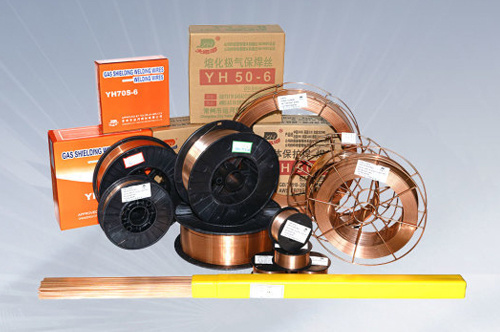
Choosing the Right Filler Metal to Pair with Carbon Steel Welding Wire: A Comprehensive Guide
Release time:
2026-05-04
Choosing the Right Filler Metal to Pair with Carbon Steel Welding Wire: A Comprehensive Guide Table of Contents 1. Introduction to Carbon Steel Welding 2. Understanding Filler Metals 3. Types of Filler Metals for Carbon Steel 3.1 Solid Filler Metals 3.2 Flux-Cored Filler Metals 3.3 Metal-Cored Filler Metals 4. Factors to Consid
Choosing the Right Filler Metal to Pair with Carbon Steel Welding Wire: A Comprehensive Guide
Table of Contents
- 1. Introduction to Carbon Steel Welding
- 2. Understanding Filler Metals
- 3. Types of Filler Metals for Carbon Steel
- 4. Factors to Consider When Choosing Filler Metal
- 4.1 Base Material Compatibility
- 4.2 Welding Process
- 4.3 Joint Design and Position
- 4.4 Desired Mechanical Properties
- 5. Applications of Carbon Steel Filler Metals
- 6. Common Mistakes to Avoid
- 7. Expert Tips for Optimal Welding
- 8. Frequently Asked Questions
- 9. Conclusion
1. Introduction to Carbon Steel Welding
Welding carbon steel is a common practice in various industries, ranging from automotive to construction. Understanding how to choose the right filler metal to pair with carbon steel welding wire is crucial for ensuring strong, durable welds. This guide aims to provide you with essential insights into different types of filler metals, their applications, and the factors you should consider when making your selection.
2. Understanding Filler Metals
Filler metals play a vital role in welding processes. They are used to fill the gap between the workpieces and provide the necessary strength and ductility to the joint. The composition of the filler metal can significantly influence the properties of the final weld, making the selection process critical for successful welding outcomes.
3. Types of Filler Metals for Carbon Steel
When it comes to welding carbon steel, several types of filler metals can be employed. The right choice depends on the specific requirements of your project.
3.1 Solid Filler Metals
Solid filler metals are characterized by their uniform composition and are typically used in processes such as Gas Metal Arc Welding (GMAW) and Shielded Metal Arc Welding (SMAW). They provide excellent strength and are available in various diameters to suit different welding applications.
3.2 Flux-Cored Filler Metals
Flux-cored filler metals are designed for use in Flux-Cored Arc Welding (FCAW). These wires contain a flux that provides shielding gas during the welding process. This type of filler metal is especially effective for outdoor welding applications due to its resistance to wind and other environmental factors.
3.3 Metal-Cored Filler Metals
Metal-cored filler metals combine the benefits of solid and flux-cored wires. They offer higher deposition rates and can produce welds with good mechanical properties. Metal-cored wires are often used for high-speed applications where productivity is essential.
4. Factors to Consider When Choosing Filler Metal
Selecting the right filler metal involves evaluating several factors that can impact the quality and durability of your weld.
4.1 Base Material Compatibility
The filler metal must be compatible with the base material. For carbon steel, using a filler metal with similar or slightly higher alloy content can enhance the overall strength of the weld.
4.2 Welding Process
Your choice of welding process influences the type of filler metal you should select. Different processes have unique requirements regarding wire diameter, flux content, and heat input.
4.3 Joint Design and Position
The design of the joint and its position during welding can affect how filler metal behaves. A well-designed joint will allow for better penetration and fusion, making it essential to consider this aspect during the selection process.
4.4 Desired Mechanical Properties
Identify the mechanical properties required for your application. Different filler metals offer varying levels of strength, ductility, and impact resistance. Choose a filler metal that meets the specific performance criteria for your project.
5. Applications of Carbon Steel Filler Metals
Carbon steel filler metals are widely used in various applications, including:
- **Automotive Manufacturing**: Ensuring strong welds in vehicle frames and components.
- **Construction**: Joining structural steel in buildings and bridges.
- **Pipe Fabrication**: Creating robust joints in pipelines for oil, gas, and water transport.
- **Shipbuilding**: Ensuring the integrity of hulls and other critical components.
6. Common Mistakes to Avoid
When choosing a filler metal, certain mistakes can compromise the quality of your weld:
- **Ignoring Compatibility**: Always ensure the filler metal is compatible with your carbon steel.
- **Neglecting Process Requirements**: Different welding processes have specific filler metal needs; make sure to match them.
- **Overlooking Mechanical Properties**: Failing to assess the required properties can lead to weak welds.
7. Expert Tips for Optimal Welding
To achieve the best results when welding with carbon steel and filler metals, consider the following expert tips:
- **Preheat the Base Metal**: Preheating can help reduce the risk of cracking.
- **Maintain Proper Travel Speed**: Ensure you have a consistent travel speed to achieve a uniform weld bead.
- **Use Appropriate Settings**: Adjust your welder settings based on the type and thickness of the materials being joined.
8. Frequently Asked Questions
1. What filler metal is best for carbon steel welding?
The best filler metal depends on the specific application, but ER70S-6 is commonly used for carbon steel due to its versatility and good mechanical properties.
2. Can I use stainless steel filler metal for carbon steel welding?
While it is possible, using stainless steel filler may lead to corrosion issues. It is generally better to stick with carbon steel filler metals for carbon steel applications.
3. How do I determine the right diameter of filler metal to use?
The diameter of the filler metal should correspond to the thickness of the base material and the welding process. Thicker materials typically require larger diameters.
4. What is the difference between solid and flux-cored filler metals?
Solid filler metals do not contain flux and are primarily used in processes like MIG welding, while flux-cored metals contain flux for shielding and are used in FCAW.
5. What should I consider when welding outdoors?
When welding outdoors, use flux-cored filler metals to mitigate the effects of wind and other environmental factors that can affect the shielding gas.
9. Conclusion
Selecting the right filler metal to pair with carbon steel welding wire is essential for achieving high-quality, durable welds. By understanding the different types of filler metals, considering key factors such as compatibility, welding process, and desired mechanical properties, you can ensure successful welding outcomes. Armed with the information in this guide, you can confidently choose the right filler metal for your next carbon steel welding project, leading to stronger and more resilient structures.
Recent information


YUNHE WELDING MATERIAL

Share to


Information Subscription
Welcome to leave your message of interest, we will contact you soon
Yaoguan Town, Wujin District, Changzhou, Jiangsu, China
Copyright©2025 Changzhou City Yunhe Welding Material Co.,Ltd.