Welding Wire with International Approvals: Quality, Compliance and Reliable Welding Performance
Release time:
2026-11-04
Welding wire plays an important role in modern manufacturing, construction, machinery production, shipbuilding and metal fabrication. As industrial projects become more demanding, buyers are paying closer attention not only to welding performance but also to product consistency, material quality and compliance with international requirements. Choosing welding wire with international approvals can help manufacturers and contractors establish more reliable welding processes and meet the quality expectations of different markets.
For distributors, engineering companies and industrial buyers, understanding the relationship between welding wire specifications, approval systems and practical applications is essential when selecting a suitable supplier.
Why International Approvals Matter for Welding Wire
International approvals and certifications provide buyers with additional information about a product's quality management, manufacturing controls and compliance with relevant technical requirements. Depending on the product type and target market, welding wire may need to meet applicable standards or approval requirements related to chemical composition, mechanical properties, welding performance and production consistency.
These requirements are particularly important for projects involving pressure vessels, steel structures, pipelines, heavy machinery and other applications where weld quality is a major consideration. Buyers should check which standards are required by their project, industry or destination market rather than assuming that one approval applies to every welding application.
A qualified manufacturer should be able to provide relevant certificates, inspection documents and technical data for the products supplied. This information helps customers evaluate whether the welding wire is suitable for their intended processes and project specifications.
Key Factors to Consider When Selecting Welding Wire
Selecting the right welding wire involves more than comparing prices. Different materials, welding processes and operating conditions require different wire specifications.
1. Chemical Composition
The chemical composition of welding wire influences weld metal properties and compatibility with the base material. Buyers should review the product's composition and technical documentation to ensure it matches the materials being joined. For applications involving carbon steel, stainless steel or other alloys, the appropriate wire grade should be selected according to the relevant welding procedure.
2. Mechanical Properties
Tensile strength, impact performance and other mechanical properties may be important depending on the application. These characteristics should be evaluated against the requirements of the applicable welding standard and project documentation. Reliable technical data makes it easier for engineers and purchasing teams to compare different products.
3. Welding Process Compatibility
Welding wire is available for different processes, including gas metal arc welding and other wire-based welding methods. The wire diameter, feeding characteristics and recommended operating parameters should be compatible with the welding equipment and production conditions. Selecting suitable wire can help maintain a stable arc and consistent welding results.
4. Surface Quality and Packaging
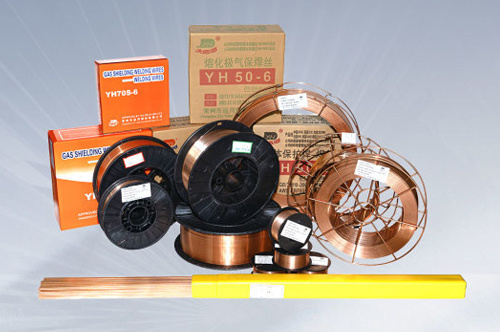
Surface condition can affect wire feeding and welding stability. Buyers should pay attention to wire cleanliness, dimensional consistency, spool quality and packaging protection. Proper packaging also helps reduce contamination and moisture exposure during storage and transportation.
Applications Across Different Industries
Welding wire with relevant international approvals may be used in a wide range of industrial sectors, depending on its material grade and technical specifications.
In construction and structural steel fabrication, welding wire is used to join steel components, frames, supports and other structural parts. Consistent product quality is important for maintaining repeatable production results.
In automotive and machinery manufacturing, welding wire supports the fabrication and assembly of metal components. Manufacturers often require stable feeding performance and dependable weld quality to support continuous production.
In shipbuilding and heavy equipment manufacturing, welding materials must be selected according to the base metal, welding procedure and service conditions. Technical documentation and traceability can help purchasing teams confirm product suitability.
For pipeline and pressure-related applications, buyers should pay particular attention to applicable industry standards, welding procedure requirements and inspection criteria. The selected welding wire must match the specific engineering requirements of the project.
How to Evaluate a Welding Wire Manufacturer
When sourcing welding wire internationally, buyers should evaluate the supplier's manufacturing capabilities as well as its certification documents.
First, review the manufacturer's product range and confirm whether it can supply the required wire grades, diameters and packaging options. A supplier with clear product specifications can make the selection process more efficient.
Second, request technical data sheets, inspection reports and relevant approval documents. Check the issuing organization, scope, validity and product coverage of each document. An approval held by a company does not automatically mean that every product it manufactures is covered by that approval.
Third, consider production consistency and quality control. Buyers may ask about raw material inspection, manufacturing procedures, batch testing and product traceability. These details help establish whether the supplier can support repeat orders and long-term procurement requirements.
Finally, evaluate communication, delivery arrangements and after-sales support. Clear technical communication is especially important when customers need customized specifications or documentation for international projects.
The Importance of Documentation and Traceability
For international procurement, accurate product documentation helps reduce uncertainty throughout the purchasing process. Technical data sheets describe product specifications, while inspection certificates and test reports provide information about the tested batch or product.
Customers should confirm that the documents correspond to the actual welding wire being supplied. Where project requirements specify particular standards or third-party approvals, the scope of certification should be checked carefully.
Batch identification and traceability can also help buyers manage incoming inspections, production records and quality investigations. Maintaining clear documentation supports better coordination between manufacturers, distributors, contractors and end users.
Conclusion
Welding wire with international approvals is an important consideration for companies seeking consistent materials and reliable supply for industrial welding projects. However, the right purchasing decision should be based on the complete product specification, applicable standards, welding process compatibility and the manufacturer's quality control capabilities.
By reviewing technical documents, verifying approval scope and evaluating supplier experience, buyers can make more informed sourcing decisions. Whether the requirement involves structural steel fabrication, machinery production, automotive components or heavy industrial applications, choosing welding wire that matches the project's technical requirements is essential for maintaining dependable welding operations.
Recent information


YUNHE WELDING MATERIAL

Share to


Information Subscription
Welcome to leave your message of interest, we will contact you soon
Yaoguan Town, Wujin District, Changzhou, Jiangsu, China
Copyright©2025 Changzhou City Yunhe Welding Material Co.,Ltd.