

Copper Coated Solid Welding Wire: Features and Applications
Release time:
2026-10-27
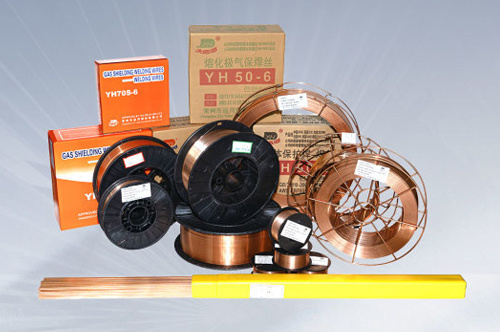
In metal fabrication and industrial manufacturing, welding consumables play an important role in maintaining production quality and process consistency. Choosing the right wire can influence arc stability, feeding performance, weld appearance, and the efficiency of daily operations. Copper Coated Solid Welding Wire is widely used in gas metal arc welding applications where consistent wire feeding and reliable welding performance are required. Its copper-coated surface helps support electrical contact and corrosion resistance during suitable storage and handling, while the solid wire structure provides a uniform consumable for a range of welding tasks.
For manufacturers, fabrication workshops, equipment producers, and welding supply distributors, understanding the properties and selection criteria of copper-coated solid wire can help match the product to specific materials, equipment, and production requirements.
What Is Copper Coated Solid Welding Wire?
Copper coated solid welding wire is a solid metal welding consumable with a thin copper layer applied to its surface. It is commonly used in gas metal arc welding (GMAW), also known as MIG/MAG welding, depending on the shielding gas and welding process.
The copper coating can help improve electrical contact between the wire and the contact tip, supporting a more consistent current transfer during welding. It can also provide a degree of surface protection against oxidation under appropriate conditions. The underlying wire composition, diameter, surface quality, and manufacturing process remain important factors in determining the wire's overall performance.
Copper-coated solid wire is available in different grades and diameters to suit various welding materials and operating conditions. Buyers should select a grade according to the base metal, required weld properties, shielding gas, welding position, and applicable welding procedure.
Key Features of Copper Coated Solid Welding Wire
Consistent Wire Feeding
Smooth wire feeding is important in automated welding lines and manual welding operations alike. A wire with a uniform diameter and suitable surface finish can help reduce feeding interruptions when used with compatible drive rolls, liners, and contact tips.
Consistent feeding can support more stable production, particularly when a workshop performs repeated welds or operates equipment for extended periods. However, feeding performance also depends on wire storage, feeder maintenance, torch condition, and correct equipment setup.
Electrical Contact and Arc Performance
The copper surface helps facilitate electrical contact as the wire passes through the contact tip. Appropriate contact and a properly configured welding system contribute to stable current transfer and arc operation.
Actual arc behavior depends on several factors, including wire chemistry, wire diameter, welding current, voltage, wire feed speed, shielding gas, and the condition of the welding equipment. Therefore, buyers should evaluate the wire as part of the complete welding setup rather than treating the coating as the only factor affecting performance.
Surface Protection and Handling
Copper coating can offer some protection to the wire surface, but it does not make the product immune to moisture, contamination, or improper storage. Maintaining a clean, dry environment is important for preserving wire condition and avoiding issues during welding.
Manufacturers and distributors should also review packaging quality, sealing, spool condition, and transport arrangements when purchasing welding consumables in bulk.
Common Applications in Industrial Welding
Copper coated solid welding wire is used in a variety of metal fabrication and manufacturing operations. Typical applications may include steel structures, machinery frames, metal cabinets, automotive components, agricultural equipment, and general steel fabrication.
In manufacturing workshops, solid wire can be used for repetitive joints where production consistency and controlled welding parameters are important. Equipment manufacturers may use it when fabricating frames, brackets, supports, and other components made from compatible base metals.
Construction-related fabrication is another potential application, depending on the material grade, joint design, welding procedure, and project specifications. For critical structural or pressure-related work, the welding consumable must meet the required standards and be approved for the intended application.
The correct wire grade should always be selected based on the base metal and the required mechanical properties of the finished weld. Not every copper-coated solid wire is suitable for every steel grade or welding environment.
How to Choose the Right Welding Wire
Selecting welding wire involves more than comparing price or packaging. Buyers should consider several technical and operational factors before placing an order.
Wire grade and chemical composition: The wire should be compatible with the base metal and meet the required weld strength, toughness, and other performance criteria. Review the manufacturer's technical data sheet and relevant classification standards.
Wire diameter: Common diameters vary by product range and application. The appropriate diameter depends on the welding current, material thickness, joint design, equipment capacity, and production method.
Shielding gas: Different wire grades and welding procedures may require specific shielding gas compositions. The gas selection can affect arc characteristics, penetration, spatter, and weld appearance.
Welding equipment: Confirm that the wire spool, diameter, and feeding characteristics are compatible with the welding machine, wire feeder, liner, drive rolls, and contact tip.
Applicable standards: For industrial projects, check the required classifications, inspection requirements, and documentation. Where necessary, request material certificates and supporting technical information from the supplier.
Storage and Quality Control
Proper storage helps maintain the condition of copper-coated solid welding wire throughout transportation and use. Wire should generally be kept in a dry, clean environment and protected from condensation, dust, oil, and other contaminants.
Before use, operators should inspect the packaging and spool for damage. Wire that has been exposed to moisture or contamination should be assessed according to the manufacturer's recommendations before being introduced into a production process.
Quality control should cover more than visual appearance. Relevant checks may include wire diameter consistency, surface condition, spool winding, packaging integrity, batch identification, and documentation. For larger manufacturing operations, incoming inspection procedures can help identify problems before the consumable enters the welding line.
Suppliers should also provide clear product specifications and maintain traceability where required. These measures can help buyers manage quality expectations across repeat orders and different production batches.
Why Reliable Supply Matters to Manufacturers
For factories and fabrication businesses, welding consumables are part of everyday production planning. Delays in wire supply or variations between batches can interrupt work schedules and create additional inspection or adjustment requirements.
When comparing suppliers, purchasing teams should evaluate product consistency, available wire grades and diameters, packaging options, production capacity, lead times, and technical support. Price remains important, but it should be considered alongside product specifications and the supplier's ability to meet delivery commitments.
For distributors and international buyers, export packaging, labeling, transport protection, and shipping documentation may also influence the purchasing decision. Confirming these details in advance can make repeat procurement more predictable.
Conclusion
Copper Coated Solid Welding Wire is a practical welding consumable for many GMAW applications where suitable wire feeding, electrical contact, and consistent manufacturing quality are important. Its performance depends not only on the copper-coated surface but also on the wire grade, diameter, base material, shielding gas, welding parameters, equipment condition, and storage practices.
Before purchasing, manufacturers and distributors should confirm the technical specifications, applicable standards, packaging requirements, and intended application. Working with a supplier that provides clear documentation and consistent product quality can help businesses select welding wire that fits their production needs.
Recent information


YUNHE WELDING MATERIAL

Share to


Information Subscription
Welcome to leave your message of interest, we will contact you soon
Yaoguan Town, Wujin District, Changzhou, Jiangsu, China
Copyright©2025 Changzhou City Yunhe Welding Material Co.,Ltd.