

Flux Cored Welding Wire: A Practical Guide to Welding Performance and Selection
Release time:
2026-09-30
When manufacturers need efficient welding solutions for fabrication, construction, machinery, and repair applications, choosing the right Flux Cored Welding Wire can have a direct impact on welding efficiency, deposition performance, joint quality, and production consistency. Flux cored wire is widely used because it can provide stable welding performance while supporting different welding processes, materials, and working environments.
For welding consumable distributors, fabrication companies, equipment manufacturers, and industrial buyers, selecting a suitable welding wire requires more than simply comparing prices. Wire diameter, flux formulation, welding position, base metal, shielding conditions, mechanical requirements, surface condition, and application environment should all be considered before purchasing.
Understanding these factors can help buyers choose a welding consumable that matches their production requirements while improving welding efficiency and reducing unnecessary rework.
What Is Flux Cored Welding Wire?
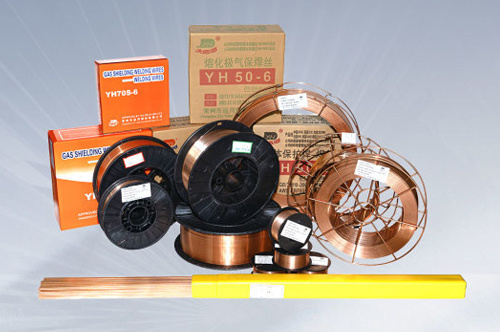
Flux cored welding wire is a tubular welding consumable with a metal sheath surrounding a flux-filled core. During welding, the flux inside the wire contributes to arc stability, slag formation, shielding, and other functions depending on the specific wire formulation.
Compared with solid welding wire, flux cored wire can provide additional flexibility because the internal flux can be formulated for different welding characteristics and application requirements.
Different flux cored wires are designed for different base metals, welding positions, current conditions, and mechanical performance requirements. Some products are intended for general fabrication, while others are developed for structural steel, heavy equipment, shipbuilding, pipelines, repair, or wear-resistant applications.
For buyers, selecting the correct classification and specification is important because the welding wire needs to be compatible with the welding equipment and base material.
How Flux Cored Welding Wire Works
During welding, the wire is continuously fed through the welding gun toward the workpiece. The arc generates heat and melts the wire and base metal to form the weld pool.
As the flux core reacts during the welding process, it can generate shielding gases and form slag over the weld bead, depending on the wire type. These functions help protect the molten metal from atmospheric contamination and influence the final appearance and characteristics of the weld.
The flux formulation also affects arc behavior, penetration, deposition rate, slag removal, and welding stability.
Because different formulations provide different characteristics, manufacturers should select welding wire based on the actual welding process and application rather than treating all flux cored wires as interchangeable.
Key Advantages of Flux Cored Welding Wire
One important advantage of flux cored wire is its potential for high deposition efficiency. In applications where a large amount of weld metal needs to be deposited, an appropriate flux cored welding process can help improve production efficiency.
Flux cored wire can also provide useful welding characteristics in demanding industrial environments. Depending on the wire type, it may support good arc stability, penetration, slag formation, and weld appearance.
Another advantage is product versatility. Manufacturers can develop different flux formulations for different materials and applications, allowing buyers to select a product according to specific welding requirements.
For large fabrication projects, improved welding efficiency can contribute to reduced labor time and better production scheduling.
Choosing the Right Wire Diameter
Wire diameter is an important specification when selecting flux cored welding wire. Common diameters vary according to the welding equipment, material thickness, welding current, and application.
A smaller wire diameter may be suitable for thinner materials or applications requiring greater control. Larger diameters can be used for higher deposition requirements and thicker materials when supported by the appropriate welding equipment.
The wire diameter should also be compatible with the welding machine and wire feeding system. Incorrect selection can affect feeding stability, arc performance, and overall welding efficiency.
Before placing an order, buyers should confirm the required diameter, spool size, packaging format, welding current range, and equipment compatibility.
Base Metal and Application Requirements
The base metal is another major factor in welding wire selection. Carbon steel, low-alloy steel, stainless steel, and other materials may require different welding consumables.
Using a wire that is not suitable for the base metal can result in poor weld performance or difficulties in achieving the required mechanical properties.
Application conditions also matter. Welding requirements for structural steel fabrication may differ from those for heavy machinery repair or industrial equipment manufacturing.
Buyers should provide detailed information about the base material, material thickness, joint design, welding position, expected mechanical properties, and working environment when discussing product selection with a welding wire manufacturer.
Welding Position and Process Compatibility
Not every flux cored welding wire is designed for every welding position. Depending on the formulation, a product may be optimized for flat, horizontal, vertical, overhead, or multiple-position welding.
The welding process also affects wire selection. Some flux cored wires are designed for use with external shielding gas, while others are formulated for self-shielded applications.
Gas-shielded flux cored welding can provide different arc and weld characteristics compared with self-shielded flux cored welding.
Therefore, buyers should confirm the recommended welding process before purchasing. The wire specification should match the welding machine, shielding gas requirements, current type, polarity, and operating conditions.
Weld Quality and Consistency
For industrial welding, consistent weld quality is essential. A welding wire should provide stable feeding, predictable arc behavior, and consistent deposition during production.
Manufacturing quality is therefore important when selecting a welding wire supplier. Variations in wire diameter, surface condition, flux filling, or winding quality can affect feeding performance and welding stability.
Professional manufacturers typically apply quality-control procedures to raw materials, wire forming, flux filling, drawing, winding, and final packaging.
For large-volume buyers, batch consistency is especially important because welding consumables may be used across multiple production lines or different projects.
Storage and Handling of Flux Cored Welding Wire
Proper storage is essential for maintaining welding wire performance. Welding consumables should generally be stored in a clean and dry environment according to the manufacturer's recommendations.
Moisture and contamination can affect welding performance and may contribute to defects if the product is not properly handled.
Packaging should provide sufficient protection during transportation and storage. Buyers purchasing large quantities should also consider warehouse conditions and inventory rotation.
For long-distance international shipments, packaging strength and moisture protection can be particularly important.
A reliable supplier should provide clear information regarding product storage, handling, shelf life, and packaging requirements.
Applications of Flux Cored Welding Wire
Flux cored welding wire is used in a wide range of industrial applications. Structural steel fabrication is one common area, where efficient welding is required for frames, supports, beams, and other fabricated components.
Heavy machinery manufacturers and repair companies may also use flux cored wire for equipment fabrication, maintenance, and component repair.
Other applications can include shipbuilding, construction equipment, pressure-related fabrication, storage structures, transportation equipment, and general industrial manufacturing, depending on the specific wire classification.
Wear-resistant flux cored wires can also be developed for applications where surfaces are exposed to abrasion or other demanding operating conditions.
The appropriate product should always be selected according to the base material and technical requirements of the application.
How to Choose a Flux Cored Welding Wire Supplier
When sourcing flux cored welding wire, buyers should evaluate suppliers based on product quality, manufacturing capabilities, technical support, production capacity, packaging, and delivery reliability.
First, confirm whether the supplier can provide the required classification, diameter, flux formulation, and welding process compatibility.
Second, examine quality-control procedures. Consistent raw materials, accurate wire dimensions, stable flux filling, and controlled winding can all contribute to reliable welding performance.
Third, consider production capacity and delivery capability. A supplier may be able to support small orders but struggle to maintain stable supply for larger projects.
OEM and customized packaging may also be important for distributors and welding supply brands. Private-label products can help businesses develop their own product ranges while using an established manufacturing system.
Why OEM and Wholesale Supply Can Benefit Industrial Buyers
For distributors and large welding consumable users, OEM and wholesale supply can provide greater flexibility in purchasing and packaging.
Manufacturers may offer customized spool sizes, labels, packaging designs, product specifications, and order quantities according to customer requirements.
Long-term cooperation can also improve supply consistency. Once the required product specification has been confirmed, future orders can follow an established production and quality-control process.
For businesses with regular welding wire demand, this can simplify inventory planning and reduce the need to repeatedly qualify new suppliers.
Conclusion
Flux Cored Welding Wire provides a versatile welding consumable solution for many industrial fabrication, construction, repair, and manufacturing applications. Its tubular structure and internal flux formulation can support different welding characteristics, deposition requirements, and operating conditions.
For buyers, the most important considerations include base metal, wire diameter, welding process, shielding requirements, welding position, mechanical performance, packaging, and supplier quality control.
Choosing a suitable welding wire manufacturer can help industrial users maintain consistent welding performance while supporting efficient production and reliable supply.
Before placing an order, buyers should provide detailed application information and confirm product specifications with the supplier. With the right combination of welding wire, equipment, process parameters, and operator control, manufacturers can establish a more stable and efficient welding operation.
Recent information


YUNHE WELDING MATERIAL

Share to


Information Subscription
Welcome to leave your message of interest, we will contact you soon
Yaoguan Town, Wujin District, Changzhou, Jiangsu, China
Copyright©2025 Changzhou City Yunhe Welding Material Co.,Ltd.