
Flux Cored Wire for Shipbuilding Improves Welding Quality and Efficiency
Release time:
2026-07-17
OEM Flux Cored Wire for Shipbuilding with stable welding performance, high strength, and reliable marine fabrication solutions.
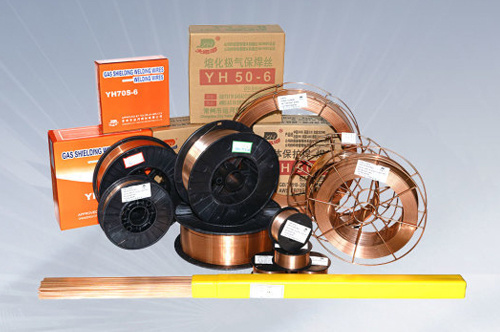
Flux Cored Wire for Shipbuilding is an advanced welding consumable developed to meet the demanding requirements of marine construction and heavy steel fabrication. Shipbuilding involves large-scale structures, complex welding positions, and strict requirements for strength, durability, and corrosion resistance. Compared with traditional welding methods, flux cored wire provides better arc stability, higher deposition efficiency, and improved adaptability, making it an important material for modern shipyard operations.
Understanding the Role of Flux Cored Wire in Shipbuilding
Ship structures are usually manufactured with large steel plates, reinforced sections, and complex joints that must withstand mechanical stress, seawater exposure, and long-term operation. Welding quality directly affects the safety and service life of ships, so selecting the appropriate welding material is essential.
Flux cored wire is a tubular welding wire containing a flux core that provides shielding, arc stabilization, and metallurgical improvements during the welding process. Unlike solid welding wire, the internal flux composition allows manufacturers to adjust welding performance according to different steel grades and working environments.
In shipbuilding applications, flux cored wire is widely used for hull structures, deck components, offshore equipment, and heavy steel assemblies. Its ability to provide stable weld formation and reduce welding defects makes it suitable for both automated and manual welding processes.
Material Structure and Working Principle of Flux Cored Wire
Flux cored wire consists of a metal outer shell and an internal powder-filled core. During welding, the flux components melt and create protective gases and slag that shield the molten weld pool from atmospheric contamination. This process helps prevent defects caused by oxygen and nitrogen exposure.
The composition of the flux core can be customized with different alloying elements, deoxidizers, and stabilizers. These materials influence weld strength, impact resistance, penetration depth, and surface appearance. For shipbuilding, where welded joints must meet strict mechanical requirements, the selection of suitable flux formulations is critical.
Compared with conventional welding electrodes, flux cored wire offers continuous feeding capability and better productivity. Welders can achieve longer welding operations without frequent replacement of consumables, improving efficiency in large ship manufacturing projects.
Advantages of Using Flux Cored Wire in Marine Welding
One major advantage of flux cored wire is its high welding efficiency. Shipbuilding requires thousands of meters of weld seams, and improving deposition speed can significantly reduce production time. Flux cored wire allows higher welding current levels while maintaining stable arc performance, making it suitable for large-scale fabrication.
Another important benefit is excellent weld quality. The shielding effect created by the flux core reduces the risk of porosity, cracks, and other welding problems. This is especially valuable for ships operating in harsh marine environments where welded structures experience constant vibration, pressure changes, and corrosion challenges.
Flux cored wire also provides good welding flexibility. It can be used in different welding positions, including flat, vertical, and overhead welding. This adaptability is particularly useful in shipyards where workers must weld complex structures with limited access areas.
Comparison Between Flux Cored Wire and Other Welding Materials
Solid welding wire is commonly used in industrial welding because of its clean operation and simple handling. However, it may require higher levels of surface preparation and controlled shielding gas conditions. Flux cored wire provides additional protection through its internal flux system, which improves performance in challenging environments.
Compared with manual metal arc welding electrodes, flux cored wire offers higher productivity because of continuous wire feeding. Traditional electrodes require frequent replacement, while flux cored wire allows longer uninterrupted welding operations. This difference becomes significant in large shipbuilding projects where efficiency and consistency are major concerns.
Submerged arc welding is another method used in heavy steel fabrication. It provides excellent productivity for straight and long weld seams but has limitations in complex positions. Flux cored wire provides greater operational flexibility while maintaining good mechanical properties, making it a practical choice for various shipbuilding applications.
Important Factors When Selecting Flux Cored Wire
Choosing the right flux cored wire requires consideration of several technical factors. The base material type is one of the most important aspects because different ship steels require compatible welding consumables. High-strength steels, low-temperature steels, and corrosion-resistant alloys may require specific flux formulations.
Welding environment is another key factor. Shipyards often operate in conditions involving humidity, wind, and changing temperatures. A suitable flux cored wire should provide stable performance under these conditions while maintaining weld integrity.
Mechanical properties such as tensile strength, impact toughness, and crack resistance should also match the requirements of the final structure. Proper storage and handling of welding wire are equally important because moisture absorption can affect welding performance and weld quality.
Applications of Flux Cored Wire in Shipbuilding Industry
Flux cored wire is widely applied in various shipbuilding processes, including hull assembly, structural reinforcement, pipeline welding, and offshore platform construction. Large vessels require strong and reliable welded connections, and flux cored wire helps manufacturers achieve consistent results across different production stages.
In ship repair and maintenance, flux cored wire is also valuable because it provides efficient welding solutions for restoring damaged steel components. Its flexibility allows technicians to perform repairs in different working environments while maintaining structural strength.
Modern shipyards increasingly use automated welding systems to improve production efficiency. Flux cored wire is compatible with robotic welding equipment, enabling precise control of welding parameters and improving consistency in mass production.
Future Development Trends of Shipbuilding Welding Technology
The shipbuilding industry continues to move toward higher efficiency, stronger materials, and environmentally responsible manufacturing processes. As ships become larger and more advanced, welding consumables must provide improved performance and reliability.
Future flux cored wire development is expected to focus on enhanced mechanical properties, lower welding emissions, and better compatibility with automated welding systems. Improvements in flux formulation and manufacturing technology will help create welding materials that meet increasingly strict marine engineering standards.
With its combination of productivity, flexibility, and weld quality, flux cored wire will continue to play an important role in shipbuilding and heavy fabrication industries. It provides a practical solution for manufacturers seeking reliable welding performance in demanding marine applications.
Recent information


YUNHE WELDING MATERIAL

Share to


Information Subscription
Welcome to leave your message of interest, we will contact you soon
Yaoguan Town, Wujin District, Changzhou, Jiangsu, China
Copyright©2025 Changzhou City Yunhe Welding Material Co.,Ltd.