

Stainless Steel MIG Welding Wire Improves Welding Efficiency and Corrosion-Resistant Joint Quality
Release time:
2026-06-26
New stainless steel MIG welding wire brands offering stable arc performance, low spatter, excellent weld strength, and reliable solutions for industrial welding
Introduction to Stainless Steel MIG Welding Wire
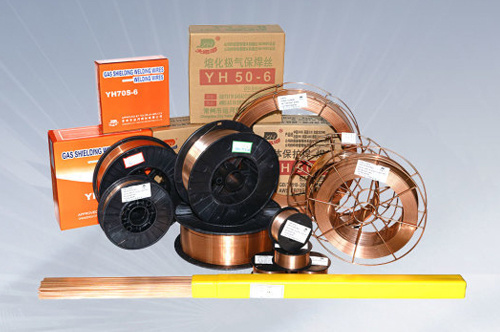
Stainless steel MIG welding wire is a consumable electrode specifically designed for Metal Inert Gas (MIG) and Gas Metal Arc Welding (GMAW) processes involving stainless steel materials. It provides a continuous feed of filler metal while producing a stable electric arc under shielding gas protection. Compared with coated electrodes used in manual welding, MIG welding wire enables higher deposition rates, improved production efficiency, and consistent weld quality.
The selection of an appropriate stainless steel MIG welding wire depends on the base material, mechanical property requirements, corrosion resistance, operating environment, and welding position. Modern manufacturing industries increasingly rely on stainless steel welding wires to meet demanding requirements in food processing equipment, chemical processing systems, pressure vessels, architectural fabrication, marine engineering, medical equipment, and industrial automation.
As manufacturing technologies continue to advance, stainless steel MIG welding wire has become an important solution for achieving reliable structural integrity, attractive weld appearance, and long-term durability.
Composition and Metallurgical Characteristics
The performance of stainless steel MIG welding wire is closely related to its alloy composition. Various wire grades are developed to match different stainless steel families including austenitic, ferritic, martensitic, and duplex stainless steels.
Common alloying elements include chromium, nickel, molybdenum, manganese, silicon, and controlled amounts of carbon. Chromium promotes oxidation resistance by forming a stable passive oxide layer. Nickel improves ductility and toughness while supporting austenitic microstructure stability. Molybdenum enhances resistance to chloride corrosion and pitting, making certain wire grades suitable for marine or chemical environments.
Silicon functions as a deoxidizer during welding, reducing porosity and improving weld bead smoothness. Carefully balanced alloy chemistry also minimizes the risk of hot cracking while maintaining mechanical strength.
Manufacturers maintain strict control over wire chemistry through modern steel refining processes to ensure consistent arc characteristics and predictable weld performance.
Manufacturing Process of Stainless Steel MIG Welding Wire
Producing high-quality stainless steel MIG welding wire involves several precision manufacturing stages.
Premium stainless steel billets are first melted and refined to achieve accurate chemical composition. The material is then hot rolled into wire rods before undergoing multiple cold drawing operations that gradually reduce the diameter while improving dimensional accuracy.
Intermediate annealing restores ductility after cold working, allowing further drawing without excessive work hardening. Surface cleaning removes oxides and contaminants that may interfere with electrical conductivity or wire feeding.
Finally, the wire receives precision winding onto spools under carefully controlled tension to ensure smooth and uninterrupted feeding during automated welding operations.
Advanced production equipment helps maintain consistent wire diameter, roundness, tensile strength, and surface finish throughout the manufacturing process.

Types of Stainless Steel MIG Welding Wire
Different welding applications require different filler metal classifications.
ER308L welding wire is commonly used for welding 304 and 304L stainless steels in general fabrication industries. Its low carbon content helps reduce carbide precipitation and improves corrosion resistance after welding.
ER309L wire is frequently selected for joining dissimilar metals such as stainless steel to carbon steel. It is also used for buffer layers before hardfacing applications.
ER316L welding wire contains molybdenum, making it suitable for environments exposed to chlorides, seawater, and aggressive chemicals. Industries producing pharmaceutical equipment, food processing machinery, and marine components often choose this grade.
ER347 wire contains niobium stabilization, helping prevent intergranular corrosion under elevated temperature service conditions. It is commonly applied in power generation and petrochemical equipment.
Specialized duplex stainless steel welding wires are designed for applications requiring high strength and excellent stress corrosion cracking resistance.
Selecting the proper filler metal ensures mechanical compatibility and long-term service reliability.
Advantages of Stainless Steel MIG Welding Wire
One of the major advantages of stainless steel MIG welding wire is its high welding efficiency. Continuous wire feeding supports long welding operations without frequent interruptions for electrode replacement.
Stable arc performance contributes to consistent penetration and uniform bead formation. Reduced spatter lowers post-weld cleaning requirements while improving production efficiency.
The resulting welds typically exhibit excellent corrosion resistance when proper shielding gas and welding parameters are used. Good ductility allows welded structures to withstand vibration and thermal expansion without premature cracking.
Automated welding systems further improve productivity by integrating robotic welding equipment with precision wire feeding systems.
High-quality welding wire also minimizes feeding resistance, reducing equipment downtime and ensuring reliable arc ignition.
Shielding Gas Selection
Shielding gas plays a critical role in achieving optimal weld quality with stainless steel MIG welding wire.
Pure argon is generally not recommended because it may produce shallow penetration. Instead, argon mixed with small amounts of carbon dioxide or oxygen provides improved arc stability and bead appearance.
Common shielding gas mixtures include:
Argon with 1–2% oxygen for improved wetting characteristics.
Argon with 2–5% carbon dioxide for balanced penetration and arc stability.
Helium-argon mixtures for thicker materials requiring greater heat input.
The correct shielding gas depends on material thickness, joint design, welding position, and productivity requirements.
Maintaining adequate gas flow prevents atmospheric contamination and reduces oxidation during welding.
Welding Parameter Optimization
Achieving high-quality welds requires careful adjustment of welding parameters.
Wire feed speed directly influences deposition rate and welding current. Excessive feed speed may create unstable metal transfer, while insufficient feed can produce inconsistent arc behavior.
Voltage affects bead width and penetration profile. Proper voltage settings maintain stable arc length and smooth metal transfer.
Travel speed should balance penetration with productivity. Excessively slow travel may increase distortion, whereas excessive speed can result in incomplete fusion.
Contact tip distance also influences current transfer and arc stability.
Professional welding procedures often establish qualified parameter ranges for different material thicknesses and joint configurations to ensure repeatable production quality.
Common Industrial Applications
Stainless steel MIG welding wire is widely used across numerous industries requiring corrosion-resistant fabrication.
Food processing equipment manufacturers use stainless steel welding wire to fabricate hygienic processing lines, storage tanks, conveyors, and mixing equipment.
Chemical processing facilities depend on corrosion-resistant welds for pressure vessels, pipelines, pumps, and reactor systems exposed to aggressive media.
Marine engineering applications include ship components, offshore platforms, desalination equipment, and coastal infrastructure requiring resistance to saltwater corrosion.
Architectural fabrication employs stainless steel welding wire for decorative structures, handrails, curtain walls, bridges, and public infrastructure projects.
Medical equipment manufacturers utilize precision stainless steel welding for surgical instruments, laboratory equipment, and sterile processing systems where cleanliness and corrosion resistance are essential.
Automotive, railway, and energy industries also rely on stainless steel MIG welding wire for structural assemblies requiring durability and consistent quality.
Storage and Handling Considerations
Proper storage helps maintain welding wire quality before use.
Wire should be stored in clean, dry environments to prevent moisture absorption and surface contamination. Exposure to excessive humidity may introduce rust or oxidation that negatively affects weld quality.
Original packaging should remain sealed until installation whenever possible.
Clean drive rolls, liners, and contact tips help prevent feeding issues and maintain stable electrical conductivity.
Operators should avoid handling bare wire with contaminated gloves that may transfer oil or dirt onto the wire surface.
Routine equipment maintenance contributes to reliable wire feeding and consistent welding performance throughout production.
Quality Control and Inspection
Manufacturers implement comprehensive quality control procedures throughout the production process.
Chemical composition is verified using spectrometric analysis to ensure compliance with applicable welding standards.
Mechanical testing evaluates tensile strength, elongation, and toughness of deposited weld metal.
Dimensional inspection confirms wire diameter consistency and spool winding quality.
Surface inspection detects scratches, contamination, or coating defects that may affect feeding performance.
Finished welding wire undergoes feeding tests and welding evaluations to verify arc stability, bead appearance, and overall usability before shipment.
Consistent quality assurance enables manufacturers to provide reliable welding consumables suitable for demanding industrial applications.
Future Development Trends
The development of stainless steel MIG welding wire continues to focus on improving productivity, automation compatibility, and environmental performance.
Manufacturers are optimizing alloy design to enhance weld toughness while reducing spatter generation. Improved wire surface technologies support higher feeding speeds in robotic welding systems.
Smart manufacturing increasingly integrates welding parameter monitoring with automated production lines, enabling real-time quality control and reduced production variability.
Research into advanced stainless steel alloys also expands the range of applications for high-performance welding wires operating under extreme temperatures, corrosive environments, and demanding mechanical loads.
As industrial fabrication becomes increasingly automated, stainless steel MIG welding wire will remain an essential material supporting efficient, high-quality, and reliable metal joining solutions.
Recent information


YUNHE WELDING MATERIAL

Share to


Information Subscription
Welcome to leave your message of interest, we will contact you soon
Yaoguan Town, Wujin District, Changzhou, Jiangsu, China
Copyright©2025 Changzhou City Yunhe Welding Material Co.,Ltd.