

CO2 Welding Wire: The Essential Ingredient for Precision and Quality in Welding
Release time:
2026-05-18
CO2 Welding Wire: The Key to Precision and Quality in Welding Table of Contents Understanding CO2 Welding Wire Benefits of CO2 Welding Wire Types of CO2 Welding Wire Solid vs. Flux Cored Wire Different Compositions and Uses Choosing the Right CO2 Welding Wire Application Areas for CO2 Welding Wire Welding Techniques with CO2 Wire Common Mistakes in CO2 Welding
CO2 Welding Wire: The Key to Precision and Quality in Welding
Table of Contents
- Understanding CO2 Welding Wire
- Benefits of CO2 Welding Wire
- Types of CO2 Welding Wire
- Choosing the Right CO2 Welding Wire
- Application Areas for CO2 Welding Wire
- Welding Techniques with CO2 Wire
- Common Mistakes in CO2 Welding
- Frequently Asked Questions
- Conclusion
Understanding CO2 Welding Wire
CO2 welding wire, often referred to as MIG (Metal Inert Gas) welding wire, plays a crucial role in the welding industry. The term "CO2" refers to the use of carbon dioxide as a shielding gas, which protects the weld pool from contamination by the surrounding atmosphere. This process is vital for producing high-quality welds, especially in environments where precision is paramount.
Welding with CO2 offers a unique combination of speed and efficiency, making it a preferred choice in various applications, from automotive repairs to heavy machinery fabrication. Understanding the properties and applications of CO2 welding wire is essential for any welder aiming to achieve professional results.
Benefits of CO2 Welding Wire
Using CO2 welding wire presents a multitude of benefits that make it an attractive option for welders of all skill levels. Here are some key advantages:
1. Cost-Effectiveness
CO2 welding wire is generally more affordable than other types of welding wires. The shielding gas used in this process is also less expensive, making it a budget-friendly choice for both hobbyists and professionals.
2. High Welding Speed
The MIG welding process allows for faster welding speeds compared to other methods. This efficiency is particularly beneficial for large-scale projects where time is a critical factor.
3. Superior Weld Quality
The use of CO2 shielding gas results in less oxidation and contamination, leading to cleaner welds with minimal defects. This quality is essential in applications that require high structural integrity.
4. Versatility
CO2 welding wire can be used on a wide range of materials, including carbon steels and low-alloy steels. This versatility makes it suitable for various industries, including construction, automotive, and manufacturing.
5. Ease of Use
For beginners, CO2 welding wire is relatively easy to work with. The process is forgiving, allowing for adjustments without compromising the quality of the weld.
Types of CO2 Welding Wire
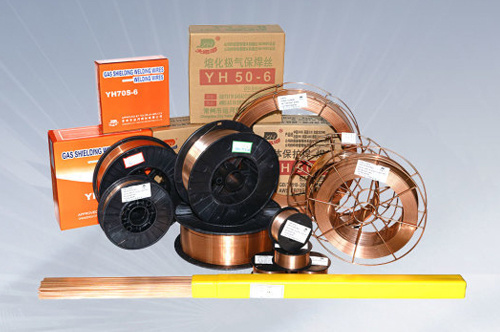
When choosing CO2 welding wire, it is important to understand the different types available. The two primary categories are solid wire and flux-cored wire.
Solid vs. Flux-Cored Wire
Solid wire is the most commonly used type in MIG welding. It requires a separate shielding gas source and is ideal for clean surfaces. Conversely, flux-cored wire contains a flux mixture that provides its own shielding gas when melted, making it suitable for outdoor applications where wind might disperse traditional shielding gas.
Different Compositions and Uses
CO2 welding wire comes in various compositions tailored for specific applications. For instance, ER70S-6 is a popular choice for welding carbon steel due to its excellent deoxidizing properties. Evaluating the specific requirements of a project will help in selecting the right composition for optimal results.
Choosing the Right CO2 Welding Wire
Selecting the appropriate CO2 welding wire involves several considerations:
1. Material Type
Identify the type of material you will be welding. Different wires are designed for specific materials, such as mild steel, stainless steel, or aluminum.
2. Thickness of Material
The thickness of the material will influence the diameter of the wire you should use. Thicker materials require larger diameter wires for adequate penetration.
3. Welding Position
Consider the welding position (flat, horizontal, vertical, or overhead). Some wires are better suited for specific positions, impacting the ease of use and quality of the weld.
Application Areas for CO2 Welding Wire
CO2 welding wire has a wide range of applications across various industries:
1. Automotive Industry
In automotive manufacturing, CO2 welding wire is extensively used for assembling car bodies, frames, and components. Its speed and quality are essential for meeting production demands.
2. Construction and Fabrication
The construction industry utilizes CO2 welding wire for fabricating structural steel components, ensuring strong and durable connections.
3. Shipbuilding
In shipbuilding, CO2 welding wire provides the robustness required for marine applications, where the integrity of welds is critical in harsh environments.
4. Pipe Welding
Pipelines for gas and oil transportation often employ CO2 welding wire due to its strength and reliability, ensuring safe transport of materials.
Welding Techniques with CO2 Wire
Employing the right welding techniques is essential when using CO2 welding wire. Here are some effective strategies:
1. Travel Speed
Maintaining a consistent travel speed is crucial. Too fast may lead to weak welds, while too slow can cause burn-through. Practice adjusting your speed for optimal results.
2. Angle of the Torch
The torch angle plays a significant role in the quality of the weld. A 10-15 degree angle is generally recommended for optimal penetration and bead shape.
3. Wire Feed Speed
Adjust the wire feed speed according to the thickness of the material. Too high a speed can lead to excessive spatter, while too low can weaken the weld.
4. Shielding Gas Flow Rate
Ensure the shielding gas flow rate is appropriate for the environment. A flow rate between 15-25 cubic feet per hour (CFH) is typically effective for CO2 welding.
Common Mistakes in CO2 Welding
Even experienced welders can make mistakes. Here are some common pitfalls to avoid:
1. Inadequate Cleaning
Failure to clean the material properly can lead to contamination, resulting in poor weld quality. Always clean surfaces to remove rust, oil, and dirt.
2. Incorrect Settings
Using the wrong voltage or wire feed speed can lead to defects. Always refer to the manufacturer’s specifications for guidance.
3. Ignoring Safety Precautions
Safety is paramount in welding. Always wear appropriate protective gear, including gloves, helmets, and protective clothing.
Frequently Asked Questions
1. What is the difference between solid wire and flux-cored wire?
Solid wire requires a separate shielding gas, while flux-cored wire contains a flux that provides its own shielding gas, making it more versatile in outdoor conditions.
2. Can CO2 welding wire be used on stainless steel?
While CO2 wire is primarily designed for carbon steels, special compositions exist for welding stainless steel, although MIG wires specifically designed for stainless steel are often preferred.
3. Is CO2 welding wire suitable for thin materials?
Yes, but thinner materials require careful adjustment of settings to prevent burn-through. Using smaller diameter wires can also help.
4. How do I know what gauge wire to use?
The gauge of the wire should correspond to the thickness of the material. Thicker materials typically require larger gauge wires for effective penetration.
5. What shielding gas is best for CO2 welding?
While pure CO2 is commonly used, a mix of argon and CO2 can also be beneficial, providing better arc stability and less spatter.
Conclusion
CO2 welding wire is an essential component for achieving high-quality welds across various industries. Its versatility, cost-effectiveness, and ease of use make it a top choice for both novice and experienced welders. By understanding the types, benefits, and techniques associated with CO2 welding wire, welders can enhance their skills and ensure exceptional results in their projects. Embracing these practices will not only lead to superior weld quality but also foster greater confidence in welding capabilities.


YUNHE WELDING MATERIAL

Share to


Information Subscription
Welcome to leave your message of interest, we will contact you soon
Yaoguan Town, Wujin District, Changzhou, Jiangsu, China
Copyright©2025 Changzhou City Yunhe Welding Material Co.,Ltd.