Solid Welding Wire: Ensuring Strong, Reliable, and High-Quality Welds
Release time:
2026-04-03
Solid welding wire provides strong, consistent welds, ensuring durability, high conductivity, and smooth metal joining in fabrication
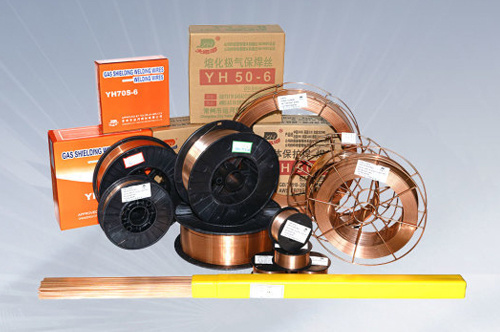
Solid welding wire is a fundamental consumable used in various welding processes, particularly in gas metal arc welding (GMAW or MIG welding) and flux-cored arc welding. Designed for consistent feeding and stable arc performance, solid welding wire plays a critical role in achieving strong, high-quality welds across a wide range of metals, including carbon steel, stainless steel, and aluminum. Its uniform composition and continuous form ensure predictable behavior during welding, reducing the likelihood of defects such as porosity, incomplete fusion, or cracking.
One of the main advantages of solid welding wire is its ability to produce clean, smooth weld beads with minimal spatter. This reduces post-weld cleaning and finishing requirements, improving overall productivity and efficiency. High-quality solid wire maintains a consistent diameter and chemical composition, allowing for reliable electrical conductivity and stable arc characteristics. This is essential for achieving precise control over penetration, bead shape, and weld strength, especially in automated or semi-automated welding setups.
Solid welding wire is typically available in various diameters and alloy compositions to meet specific application requirements. Carbon steel wires are widely used for general fabrication, structural welding, and automotive applications due to their strength and versatility. Stainless steel wires provide corrosion resistance and are ideal for food processing, chemical, and marine environments. Aluminum solid wires offer excellent weldability and are used extensively in aerospace, transportation, and lightweight metal fabrication. Choosing the appropriate wire type and diameter ensures optimal weld performance and material compatibility.
Proper storage and handling of solid welding wire are important to maintain its performance. Wires should be kept dry and free from contamination, such as oil, grease, or moisture, which can lead to weld defects. Spools are designed to feed smoothly through welding equipment, minimizing interruptions and ensuring consistent deposition. Many manufacturers also provide flux-coated or alloy-enhanced wires for specialized applications, further enhancing weld properties and process efficiency.
In addition to quality and material selection, solid welding wire contributes to cost-effectiveness in welding operations. Consistent feeding and predictable weld performance reduce material waste and rework, lowering production costs. In automated welding systems, solid wire ensures continuous operation and reduces downtime caused by irregular feeding or arc instability. Its versatility across various metals and thicknesses makes it an essential consumable in industrial, construction, automotive, and aerospace sectors.
Solid welding wire also plays a crucial role in achieving mechanical and structural integrity in welded assemblies. Strong, defect-free welds improve the durability and load-bearing capacity of fabricated components, ensuring safety and compliance with engineering standards. It allows for controlled penetration and fusion between base metals, which is vital for both thin sheet metal work and thick structural applications. High-quality solid welding wire ensures uniform metallurgical properties throughout the weld, contributing to long-term performance and resistance to fatigue, corrosion, and thermal stress.
As welding technology evolves, solid welding wire continues to adapt to meet modern manufacturing demands. Innovations include advanced alloy formulations for high-strength or corrosion-resistant applications, improved spooling techniques for better wire feed reliability, and compatibility with robotic or automated welding systems. Its ability to produce consistent, high-quality welds under diverse conditions makes solid welding wire indispensable for professional welders, fabrication shops, and industrial manufacturers seeking optimal results in metal joining processes.


YUNHE WELDING MATERIAL

Share to


Information Subscription
Welcome to leave your message of interest, we will contact you soon
Yaoguan Town, Wujin District, Changzhou, Jiangsu, China
Copyright©2025 Changzhou City Yunhe Welding Material Co.,Ltd.