


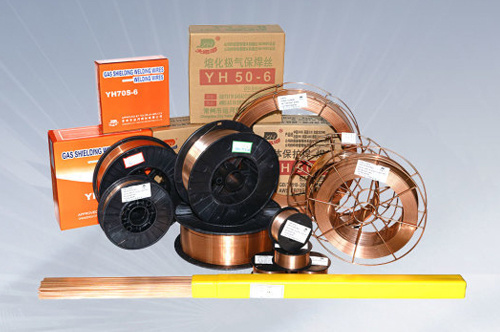
The Ultimate Guide to Choosing the Right Gas Shielded Welding Wire: Expert Insights and Tips
Release time:
2025-12-09
The Ultimate Guide to Choosing the Right Gas Shielded Welding Wire Gas shielded welding is a cornerstone in the metalworking industry, providing high-quality joins between metal components. Amongst the key elements that determine the success of a welding project, the choice of welding wire plays a pivotal role. In this extensive guide, we will explore the diverse world of gas shielded welding wire
The Ultimate Guide to Choosing the Right Gas Shielded Welding Wire
Gas shielded welding is a cornerstone in the metalworking industry, providing high-quality joins between metal components. Amongst the key elements that determine the success of a welding project, the choice of welding wire plays a pivotal role. In this extensive guide, we will explore the diverse world of gas shielded welding wires, helping you to understand how to select the best option for your specific applications.
Table of Contents
- Understanding Gas Shielded Welding
- Types of Gas Shielded Welding Wire
- Key Factors to Consider When Selecting Welding Wire
- Application-Specific Considerations
- Choosing the Right Welding Wire Diameter
- Common Mistakes to Avoid
- Maintenance and Storage of Welding Wire
- Conclusion
- FAQs
Understanding Gas Shielded Welding
Gas shielded welding encompasses various processes that utilize an inert gas shield to protect the molten weld pool from atmospheric contamination. This technique enhances the quality of the weld joint and is commonly employed in processes like Gas Metal Arc Welding (GMAW) and Gas Tungsten Arc Welding (GTAW). **Understanding the fundamentals of gas shielded welding** lays the groundwork for making informed choices about welding wire.
### h3>Benefits of Gas Shielded Welding
Gas shielded welding offers numerous advantages, including:
- **Superior weld quality:** Protects against oxidation and contamination.
- **Versatility:** Suitable for a wide range of materials, including steel, aluminum, and stainless steel.
- **Ease of use:** Offers smoother arcs and reduces spatter, making it more forgiving for beginners.
By grasping these benefits, welders can appreciate why selecting the right welding wire is crucial to optimizing their results.
Types of Gas Shielded Welding Wire
When it comes to gas shielded welding wires, several types cater to different applications and materials. The two most common types include:
### h3>1. Solid Welding Wire
Solid welding wire is frequently used in GMAW processes. It provides excellent mechanical properties and is typically made from mild steel, stainless steel, or aluminum. Key attributes include:
- **Easy feeding:** Ensures consistent wire delivery.
- **Reliable arc stability:** Produces clean welds with minimal spatter.
- **Versatile applications:** Suitable for both thin and thick materials.
### h3>2. Flux-Cored Welding Wire
Flux-cored wires contain a flux core that generates a shielding gas when heated. These wires are ideal for outdoor welding conditions. Key benefits of flux-cored wires include:
- **Self-shielding options:** Can be used without external shielding gas.
- **Deep penetration:** Suitable for thicker materials.
- **Less sensitivity to wind:** Makes outdoor operations more manageable.
Understanding these types helps in choosing the best welding wire for specific needs, ensuring quality and reliability in welding projects.
Key Factors to Consider When Selecting Welding Wire
Several key factors play a critical role in determining the best gas shielded welding wire for your projects:
### h3>1. Material Composition
The material you are welding significantly influences your choice of welding wire. For example:
- **Mild Steel:** A solid wire with a composition of ER70S-6 is often recommended for its versatility and ease of use.
- **Stainless Steel:** Consider using ER308 for austenitic stainless steel or ER309 for dissimilar metals.
- **Aluminum:** Aluminum welding typically requires a specific alloy wire, like ER4047.
### h3>2. Welding Position
The position of the weld, whether flat, horizontal, vertical, or overhead, can affect your choice of wire. Some wires perform better in certain positions due to their flow characteristics and spatter behavior.
### h3>3. Shielding Gas
The choice of shielding gas also impacts the wire selection. Common gas combinations include:
- **Argon:** Ideal for GTAW and helps provide a clean weld.
- **Argon/CO2 Mix:** Common for GMAW applications, offering a balance between penetration and spatter.
### h3>4. Thickness of Material
The thickness of the materials being welded will guide your choice of wire diameter and type. Thicker materials may require flux-cored wire for deeper penetration, while thinner materials may benefit from solid wire for a finer bead.
### h3>5. Welding Process
Different welding processes will necessitate different types of wire. Understanding whether you are using MIG or TIG welding will shape your wire selection, as each process has unique requirements.
Application-Specific Considerations
Selecting the right gas shielded welding wire often depends on the specific application. Here are some common considerations:
### h3>1. Structural Steel Fabrication
For structural steel, ER70S-6 solid wire is commonly chosen due to its balance of strength and ductility. This wire is suitable for general fabrication and construction applications.
### h3>2. Automotive Industry
In automotive applications, welding thin sheets requires a delicate approach. A smaller diameter solid wire, such as ER70S-3, can provide the necessary finesse.
### h3>3. Pipeline Welding
For pipeline welding, a flux-cored wire may be selected to ensure deep penetration and robustness, especially in outdoor conditions.
### h3>4. Aerospace Applications
Aerospace welding demands high-quality standards, often leading to the selection of specialized wires, like ER308 for stainless steel components.
Choosing the Right Welding Wire Diameter
The diameter of the welding wire is a crucial factor influencing the welding process and final results. Here are guidelines for selecting the appropriate diameter:
### h3>1. Thinner Materials
For thin materials (up to 1/8 inch), a wire diameter of 0.023 to 0.030 inches is recommended. This size allows for precise control and reduces the risk of burn-through.
### h3>2. Medium Thickness
For materials ranging from 1/8 to 1/2 inch, a diameter of 0.030 to 0.045 inches is generally suitable. This size balances penetration and control.
### h3>3. Thicker Materials
For welding materials thicker than 1/2 inch, a diameter of 0.045 inches or larger is often required to ensure adequate penetration and strength.
Common Mistakes to Avoid
To ensure optimal welding results and avoid pitfalls, consider these common mistakes:
### h3>1. Ignoring Material Compatibility
Selecting a wire that is not compatible with the base materials can lead to weak welds. Always verify compatibility before purchasing.
### h3>2. Overlooking Shielding Gas Selection
Choosing the wrong shielding gas can negatively impact weld quality. Always match the gas to your wire and application for the best results.
### h3>3. Incorrect Wire Diameter
Using an inappropriate wire diameter can lead to poor weld penetration or excessive spatter. Ensure the diameter matches the thickness of the materials being welded.
### h3>4. Neglecting Maintenance
Proper maintenance and storage of welding wire are essential for ensuring longevity and performance. Always store wire in a dry, clean environment.
Maintenance and Storage of Welding Wire
Proper care and storage of welding wire can prolong its life and maintain quality. Here are some best practices:
### h3>1. Store in a Dry Environment
Humidity can affect the quality of welding wire. Always store it in a dry, temperature-controlled area.
### h3>2. Inspect Regularly
Regularly inspect your welding wire for signs of corrosion or damage. Damaged wire should be discarded to maintain weld quality.
### h3>3. Keep Wires Covered
When storing wire, consider covering it to protect it from dust and contaminants that could affect its performance.
Conclusion
Selecting the right gas shielded welding wire is vital for achieving optimal results in your welding projects. By understanding the different types of welding wires available, considering key factors such as material compatibility and application, and avoiding common mistakes, you can enhance your welding performance. With this comprehensive guide, you are now equipped to make informed decisions that will lead to successful, high-quality welds.
FAQs
### h3>1. What is the difference between solid and flux-cored welding wire?
Solid welding wire is made from a single alloy and provides a smooth and consistent feed, while flux-cored wire contains a flux core that generates shielding gas during welding, making it suitable for outdoor use.
### h3>2. How do I determine the right welding wire diameter?
The right wire diameter depends on the thickness of the material being welded; thinner materials typically require smaller diameters.
### h3>3. Can I use the same welding wire for different materials?
While some wires are versatile, it is generally best to select a wire that is specifically designed for the material you are welding for optimal results.
### h3>4. What shielding gas should I use with my welding wire?
The shielding gas should match the type of wire and your welding process. Common choices include pure argon for TIG welding and a mix of argon and CO2 for MIG welding.
### h3>5. How should I store my welding wire?
Welding wire should be stored in a dry, clean environment, protected from humidity and contaminants to maintain its quality and performance.


YUNHE WELDING MATERIAL

Share to


Information Subscription
Welcome to leave your message of interest, we will contact you soon
Yaoguan Town, Wujin District, Changzhou, Jiangsu, China
Copyright©2025 Changzhou City Yunhe Welding Material Co.,Ltd.