

Understanding Aluminum Alloy Welding Wire: A Comprehensive Guide for Electric and Welding Professionals
Release time:
2025-12-02
Aluminum alloy welding wire is a vital component in the welding industry, particularly for professionals who work with aluminum materials. Understanding its properties and appropriate applications can significantly enhance the quality and durability of welded structures. Aluminum alloys are popular due to their lightweight, high strength, and excellent corrosion resistance. However, welding these
One of the primary advantages of using aluminum alloy welding wire is its ability to create strong, reliable joints. This wire is designed to maintain the integrity of the aluminum alloy, ensuring that the welded joint can withstand various stresses and environmental conditions. Additionally, aluminum alloys generally offer better fatigue resistance compared to other materials, making them ideal for applications in automotive, aerospace, and marine industries.
When selecting aluminum alloy welding wire, it is essential to consider the specific alloy being utilized in the base metal. Different alloys have varying properties, which can affect the welding process and the quality of the finished joint. Commonly used aluminum alloys include 4047, 4045, and 5356, each catering to distinct requirements based on their chemical composition and mechanical properties. Proper matching of the welding wire to the base metal is crucial to achieve optimal results.
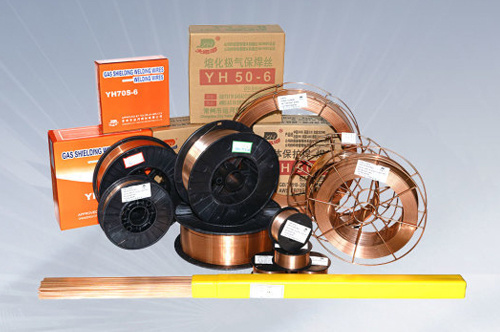
Another important aspect of aluminum alloy welding wire is its compatibility with various welding processes. MIG (Metal Inert Gas) welding is often the preferred method for aluminum welding due to its ability to provide a clean, efficient weld. The use of a spool of aluminum alloy welding wire in a MIG welding setup allows for continuous feed and high deposition rates, which is beneficial for larger projects. However, it's important to adjust the settings correctly, as aluminum requires specific voltage and wire feed speed to produce quality results.
Heat management is another critical factor when working with aluminum. Aluminum has a high thermal conductivity, which can lead to rapid heat dissipation. To counter this, welders should monitor the heat input closely to prevent issues such as burn-through or warping. Utilizing the appropriate welding wire diameter can also help manage heat distribution more effectively.
In conclusion, aluminum alloy welding wire is a key material for achieving strong and durable welds in aluminum applications. By understanding the different types of alloy wires, their compatibility with various welding processes, and the significance of heat management, professionals in the electric and welding industries can improve their welding practices and outcomes. Implementing this knowledge will aid in delivering high-quality work and ensuring long-lasting results in their projects.


YUNHE WELDING MATERIAL

Share to


Information Subscription
Welcome to leave your message of interest, we will contact you soon
Yaoguan Town, Wujin District, Changzhou, Jiangsu, China
Copyright©2025 Changzhou City Yunhe Welding Material Co.,Ltd.