

Understanding CO2 Welding Wire: A Comprehensive Guide for Professionals
Release time:
2025-11-30
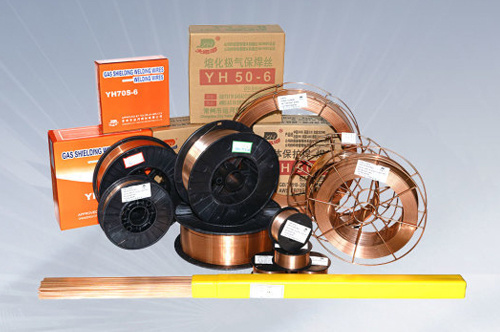
CO2 welding wire, often referred to as gas-shielded welding wire, plays a pivotal role in the welding industry, particularly for professionals engaged in various fabrication and repair tasks. This type of welding wire is primarily used in conjunction with carbon dioxide (CO2) as a shielding gas, which protects the weld pool from atmospheric contamination, ensuring strong and reliable welds. One of
One of the key benefits of CO2 welding wire is its versatility. It is suitable for welding a wide range of materials, including mild steel, stainless steel, and even certain alloys. When using CO2 as the shielding gas, the heat generated during the welding process creates a protective atmosphere that minimizes oxidation and contamination. This results in high-quality welds that exhibit excellent mechanical properties, making it a popular choice in industries such as automotive, construction, and manufacturing.
Additionally, CO2 welding wire is preferred for its cost-effectiveness. Compared to other shielding gases, CO2 is relatively inexpensive and widely available, contributing to reduced operational costs for welding projects. The use of CO2 also simplifies the welding setup, as it can be used without the need for complex gas delivery systems, making it accessible for both professionals and hobbyists.
However, while there are numerous advantages to using CO2 welding wire, it is crucial to understand the best practices to maximize its effectiveness. For instance, maintaining the appropriate welding parameters, such as voltage, wire feed speed, and travel speed, is essential for achieving optimal results. Additionally, ensuring that the workpiece is clean and free from contaminants can further enhance the quality of the weld.
Moreover, the selection of the right diameter of CO2 welding wire is critical, as it directly influences the welding performance and penetration. Typically, larger diameter wires are used for thicker materials, while smaller diameters are suitable for thinner workpieces. This selection process is vital to achieving the desired weld characteristics and ensuring the integrity of the weld joints.
In summary, CO2 welding wire is a fundamental component in the welding industry, offering distinct advantages in terms of versatility, cost-effectiveness, and quality. For professionals in the electrical and welding sectors, understanding the properties and applications of this wire can significantly enhance welding efficiency and effectiveness. By adhering to best practices and selecting the appropriate materials, welders can achieve superior results that meet industry standards and client expectations. Embrace the potential of CO2 welding wire to streamline your projects and ensure the highest quality in your welding endeavors.


YUNHE WELDING MATERIAL

Share to


Information Subscription
Welcome to leave your message of interest, we will contact you soon
Yaoguan Town, Wujin District, Changzhou, Jiangsu, China
Copyright©2025 Changzhou City Yunhe Welding Material Co.,Ltd.