

Gas Shielded Welding Wire: Performance, Applications, and Advantages
Release time:
2025-12-04
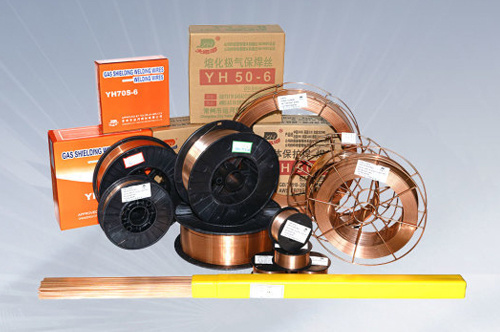
Gas shielded welding wire ensures stable arcs and clean welds by using protective gases to reduce oxidation, delivering strong, consistent joints for metal fabrication.
Gas shielded welding wire is an essential consumable widely used in modern welding processes to achieve high-quality, clean, and reliable metal joints. Unlike traditional welding methods that rely solely on flux coatings, gas shielded welding wire works in combination with protective gases—such as carbon dioxide, argon, or mixed gas—to prevent atmospheric contamination during welding. This shielding process greatly enhances the stability of the arc, reduces oxidation, and ensures superior weld quality across various industrial environments.
The wire’s design enables smooth and continuous feeding during welding, helping operators maintain consistent penetration and uniform bead appearance. By stabilizing heat distribution in the weld zone, gas shielded welding wire minimizes defects such as porosity, slag inclusions, and uneven fusion. Its efficient melting behavior increases deposition rate and improves productivity, making it suitable for high-volume fabrication tasks. The protective gas layer also allows for deeper weld penetration, resulting in stronger and more durable joints that can withstand demanding mechanical loads.
Gas shielded welding wire is available in multiple grades and alloy compositions, including carbon steel, stainless steel, and aluminum variants. This flexibility allows manufacturers to choose the best wire based on material type, weld strength requirements, and environmental conditions. Carbon steel gas shielded wires are commonly used in construction machinery, shipbuilding, rail transit, and automotive manufacturing, providing excellent mechanical properties and cost-effectiveness. Stainless steel wires deliver corrosion-resistant welds ideal for food processing equipment, petrochemical pipelines, and medical device fabrication. Aluminum gas shielded wires offer lightweight strength and superior conductivity, making them suitable for aerospace components, automotive body frames, and modern transportation systems.
One of the key advantages of gas shielded welding wire is its reduced spatter generation. By stabilizing the arc and ensuring consistent metal transfer, it helps maintain a cleaner workspace and minimizes post-weld grinding or polishing. This not only saves labor time but also extends the lifespan of equipment and tools. Additionally, gas shielded welding processes produce less smoke and fewer fumes compared to conventional welding, contributing to a safer and healthier working environment.
Technological advancements have further improved the performance of gas shielded welding wire. Many modern wires are engineered with precision-controlled chemical compositions and optimized surface coatings to enhance feeding stability and reduce friction during welding. Some high-performance variants also offer enhanced toughness at low temperatures, making them suitable for outdoor structures, offshore platforms, and cryogenic applications. Manufacturers often tailor the wire’s properties to meet international standards such as AWS, ISO, and EN, ensuring consistent and dependable results in both manual and automated welding systems.
In terms of application versatility, gas shielded welding wire performs exceptionally well in a variety of welding positions, including flat, horizontal, vertical, and overhead. Its adaptability meets the needs of complex structures and varying project requirements. Whether used for heavy-duty steel fabrication, precision welding of stainless components, or lightweight aluminum assemblies, gas shielded welding wire provides reliable performance and high efficiency.
Overall, gas shielded welding wire combines advanced metallurgy, stable arc behavior, and protective gas benefits to deliver clean, strong, and durable welds. Its broad range of applications, high productivity, and consistent quality make it an indispensable material in industries such as construction, automotive, aerospace, energy, and manufacturing. With continuous improvement in wire technology and welding equipment, gas shielded welding wire will continue to support the evolving demands of modern metal fabrication and industrial production.


YUNHE WELDING MATERIAL

Share to


Information Subscription
Welcome to leave your message of interest, we will contact you soon
Yaoguan Town, Wujin District, Changzhou, Jiangsu, China
Copyright©2025 Changzhou City Yunhe Welding Material Co.,Ltd.