

Solid Welding Wire: A Reliable Choice for Efficient Industrial Welding
Release time:
2026-09-23
Welding plays an essential role in modern manufacturing, construction, automotive production, machinery fabrication, shipbuilding, steel structures, and many other industrial applications. As manufacturers continue to pursue higher production efficiency, stable weld quality, and consistent processing performance, the selection of suitable welding consumables has become increasingly important. Solid Welding Wire is widely used in gas metal arc welding processes because it can provide stable wire feeding, consistent deposition, and efficient welding performance.
Compared with traditional welding methods that may require more manual operation, solid welding wire can work with automated and semi-automated welding systems, making it suitable for high-volume production environments. With different grades, diameters, surface treatments, and chemical compositions available, solid welding wire can be selected according to the base material, welding position, shielding gas, and required mechanical properties.
What Is Solid Welding Wire?
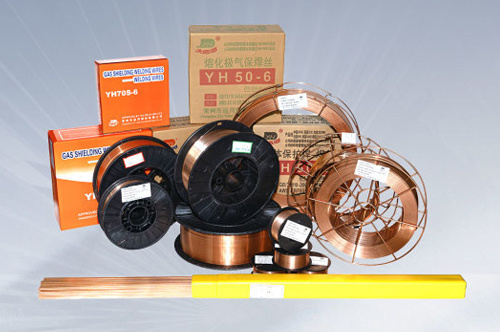
Solid welding wire is a continuous metal welding consumable with a solid cross-section. It is commonly used in gas metal arc welding, including MIG and MAG welding applications. During the welding process, the wire is continuously fed through a welding gun while an electric arc generates the heat required to melt the wire and base metal.
Unlike flux-cored welding wire, solid welding wire does not contain a flux-filled core. Instead, its welding characteristics mainly depend on the chemical composition of the wire, the welding parameters, and the selected shielding gas.
Solid welding wire can be manufactured from different metal compositions to match various base materials. Common options include carbon steel, low-alloy steel, stainless steel, aluminum, and other specialized alloys.
The wire diameter can also vary according to the application. Smaller diameters are often suitable for thinner materials and lower-current applications, while larger diameters can be used for higher deposition rates and heavier industrial work.
How Does Solid Welding Wire Work?
During a typical welding operation, the solid welding wire is continuously supplied from a spool or drum to the welding torch. When the welding power source is activated, an electric arc is established between the wire and the workpiece.
The heat generated by the arc melts the end of the wire and a portion of the base material. The molten metal then forms a weld pool. As the welding torch moves along the joint, the molten material cools and solidifies, creating a permanent connection between the components.
Shielding gas is normally used to protect the molten weld pool from atmospheric contamination. The choice of gas depends on the wire material and the welding process. Different gas combinations can influence arc stability, penetration, spatter, bead appearance, and overall welding performance.
Because the wire is continuously fed, the process can provide a relatively high deposition rate and is suitable for production environments where consistent welding speed is required.
Main Types of Solid Welding Wire
Solid welding wire is available in different material grades to meet specific welding requirements. Carbon steel welding wire is commonly used for general fabrication, structural components, machinery, automotive parts, and other applications involving carbon or mild steel.
Stainless steel welding wire is designed for welding stainless steel components where corrosion resistance and mechanical performance are important. It is widely used in food processing equipment, chemical equipment, storage tanks, pipelines, and industrial machinery.
Aluminum welding wire is suitable for aluminum components and lightweight structures. Because aluminum has different thermal and metallurgical characteristics compared with steel, the welding wire and process parameters need to be selected carefully.
Low-alloy welding wires may be used when higher strength, toughness, or specific mechanical properties are required. Specialized alloy welding wires can also be developed for particular industrial applications.
Selecting the correct wire grade is important because the chemical composition of the welding consumable should be compatible with the base metal and the desired properties of the finished weld.
Advantages of Solid Welding Wire
One of the main advantages of solid welding wire is its continuous feeding capability. Once the welding system is properly configured, operators can maintain a consistent welding process without frequently replacing individual welding rods.
Solid wire can also provide a stable arc when the correct wire, shielding gas, and welding parameters are used. Stable arc performance can help produce smoother weld beads and reduce unnecessary interruptions during production.
Another advantage is its suitability for automated welding. Manufacturing companies can integrate solid welding wire with robotic welding systems, CNC-controlled equipment, and other automated production lines.
The relatively clean welding process can also be beneficial in suitable applications. Compared with some flux-based consumables, solid wire generally produces less slag that needs to be removed after welding. This can reduce post-welding cleaning work and improve production efficiency.
For high-volume manufacturing, these characteristics can help manufacturers maintain consistent output while reducing unnecessary labor and processing time.
Applications of Solid Welding Wire
Solid welding wire is used in a wide range of industries. In automotive manufacturing, it can be used to weld vehicle components, frames, brackets, body structures, and other metal parts.
In machinery manufacturing, solid wire is commonly used for equipment frames, machine components, fabricated assemblies, and structural connections. Its compatibility with automated welding makes it suitable for factories producing large quantities of similar components.
The construction industry also uses solid welding wire for steel structures, support components, frames, and fabricated metal assemblies. Depending on the project requirements, different wire grades and diameters may be selected.
Shipbuilding and heavy equipment manufacturing are additional application areas. These industries often require strong and consistent welded joints across large metal structures.
Solid welding wire can also be used in pipelines, storage tanks, agricultural machinery, metal furniture, rail equipment, and general metal fabrication.
Choosing the Right Wire Diameter
Wire diameter is an important factor when selecting solid welding wire. The appropriate diameter depends on material thickness, welding current, joint design, welding position, and required deposition rate.
Smaller diameter wires can be useful when welding thin sheets or performing applications that require lower heat input and greater control. Larger diameter wires may be more appropriate for thick materials and applications requiring higher deposition rates.
The welding machine must also be compatible with the selected wire diameter. The wire feeding system, contact tip, welding gun, and power source should all be configured correctly.
Using an unsuitable wire diameter may result in unstable feeding, excessive spatter, insufficient penetration, or other welding problems. Therefore, buyers should consider the complete welding system rather than selecting wire based only on price or availability.
Importance of Surface Quality and Wire Feeding
Consistent wire feeding is essential for stable welding. The surface of solid welding wire should be produced and finished carefully to support smooth movement through the welding equipment.
Irregular surfaces, contamination, excessive oxidation, or dimensional variations can interfere with wire feeding and affect arc stability.
High-quality packaging is also important. Welding wire should be protected from moisture, dust, and other contaminants during storage and transportation. Suitable packaging can help preserve wire surface quality until the product is ready for use.
For industrial buyers, consistent wire dimensions and stable production quality are especially important because automated welding systems can be sensitive to variations in consumables.
Shielding Gas and Welding Performance
Shielding gas plays an important role when using solid welding wire. It protects the molten weld pool from oxygen, nitrogen, and other atmospheric elements that may negatively affect the weld.
The appropriate shielding gas depends on the wire material and application. Different gas compositions can influence penetration, arc characteristics, bead shape, spatter levels, and welding speed.
For carbon steel applications, commonly used shielding gases may include carbon dioxide or argon-based mixtures. Stainless steel and aluminum applications may require different gas configurations.
Welding operators should follow appropriate process recommendations and adjust gas flow according to the equipment and working environment.
Quality Control During Solid Welding Wire Production
Quality control is essential for welding consumables because variations in wire composition, diameter, surface condition, or packaging can affect welding performance.
During manufacturing, producers may inspect raw materials, chemical composition, wire dimensions, surface quality, mechanical properties, and packaging conditions.
Dimensional consistency is particularly important for automatic wire feeding systems. The wire should maintain stable diameter and shape throughout the spool to support continuous operation.
Packaging should also be inspected to ensure that the wire remains protected during storage and transportation.
For industrial customers, suppliers may provide product specifications and relevant quality documentation to help buyers confirm whether the welding wire meets their application requirements.
Solid Welding Wire for Automated Welding
The growth of industrial automation is increasing the demand for welding consumables that can operate consistently with robotic and automated equipment.
Solid welding wire is well suited to automated systems because it can be continuously fed from a spool or bulk package. A stable feeding process allows robots to maintain programmed welding paths and consistent operating parameters.
In automotive, machinery, and metal fabrication plants, robotic welding systems may operate for extended periods. Reliable consumables can therefore help reduce interruptions caused by wire feeding problems or inconsistent wire quality.
Automation also allows manufacturers to maintain repeatable welding parameters across large production batches. When the same welding program is used with consistent materials and consumables, manufacturers can better control production processes.
OEM and Customized Welding Wire Solutions
Different industrial applications may require specialized welding wire specifications. For this reason, some manufacturers provide OEM and customized solutions for customers with particular material, packaging, or application requirements.
Customization may involve wire diameter, material grade, spool size, packaging format, labeling, or other product specifications.
Before placing a customized order, buyers should provide detailed information about the base material, welding process, equipment, operating parameters, required wire diameter, and expected production volume.
Samples can also be evaluated before large-scale production. This allows users to verify wire feeding, arc behavior, weld appearance, and compatibility with their welding equipment.
Storage and Handling Recommendations
Proper storage is important for maintaining welding wire quality. Welding consumables should normally be stored in a clean and dry environment and protected from excessive humidity.
When a spool is opened, operators should avoid unnecessary exposure to moisture and contaminants. Damaged packaging should also be addressed promptly.
Before welding, users should inspect the wire for visible contamination, rust, or other problems. Proper handling can help maintain stable welding performance and reduce avoidable process issues.
Following the manufacturer's storage and handling recommendations can help preserve the intended condition of the welding wire.
Future Trends in Solid Welding Wire
The welding industry is moving toward greater automation, higher productivity, improved process control, and more efficient manufacturing. These trends are influencing the development of welding consumables.
Future solid welding wire products may focus on improved feeding characteristics, reduced spatter, better arc stability, and compatibility with advanced robotic welding systems.
Manufacturers are also paying greater attention to material efficiency and production consistency. As factories adopt more automated production lines, welding consumables need to provide reliable performance over long operating cycles.
At the same time, specialized materials and lightweight structures are creating demand for welding wires designed for stainless steel, aluminum, high-strength steels, and other advanced alloys.
Conclusion
Solid Welding Wire is an important welding consumable for modern industrial manufacturing. Its continuous feeding capability, stable welding performance, compatibility with automated systems, and wide material selection make it suitable for many applications.
From automotive and machinery manufacturing to construction, shipbuilding, steel structures, and general metal fabrication, solid welding wire can support efficient and repeatable welding operations when the correct product and process parameters are selected.
For buyers, important considerations include wire material, diameter, surface quality, shielding gas compatibility, packaging, quality control, and supplier reliability. For specialized projects, OEM customization can provide additional flexibility.
As industrial production continues to adopt automation and advanced manufacturing technologies, high-quality solid welding wire will remain an important part of efficient welding processes, helping manufacturers achieve consistent weld quality and reliable production performance.
Recent information


YUNHE WELDING MATERIAL

Share to


Information Subscription
Welcome to leave your message of interest, we will contact you soon
Yaoguan Town, Wujin District, Changzhou, Jiangsu, China
Copyright©2025 Changzhou City Yunhe Welding Material Co.,Ltd.