

Welding Wire – Essential Consumables for Strong and Precise Metal Joining
Release time:
2025-11-21
Welding wire is a metal filler used in MIG and TIG welding to join metals, providing strong, precise, and durable welds for industrial applications.
Welding wire is a critical consumable used in various welding processes, including MIG (Metal Inert Gas) and TIG (Tungsten Inert Gas) welding. It serves as the filler material that melts and fuses with base metals to create strong, durable joints. Welding wire is widely used in construction, automotive, shipbuilding, pipeline, and industrial manufacturing applications due to its ability to provide high-quality welds, excellent mechanical properties, and consistent performance. The choice of welding wire depends on the base metals being joined, the desired weld characteristics, and the specific welding process being employed.
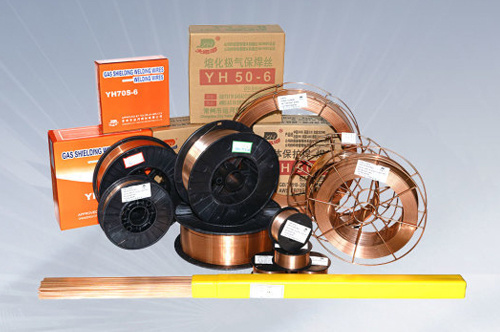
MIG welding wire, commonly referred to as solid or flux-cored wire, is designed for semi-automatic or automatic welding processes. Solid wires are used with an inert shielding gas to prevent contamination, providing clean, precise welds with minimal spatter. Flux-cored wires contain a flux core that generates protective gases during welding, allowing for welding in outdoor or drafty environments without the need for external shielding gas. These wires are available in a variety of alloys, including carbon steel, stainless steel, and aluminum, to match different base materials and application requirements.
TIG welding wire, on the other hand, is typically a filler rod used in conjunction with a tungsten electrode. TIG welding produces high-quality, precise welds on thin materials or projects requiring aesthetic finishes. TIG wires are available in numerous alloys, including stainless steel, aluminum, and copper-nickel blends. The wire diameter and alloy composition are carefully selected to match the base material, ensuring optimal fusion, strength, and corrosion resistance.
The quality of welding wire directly affects the mechanical properties, appearance, and longevity of the weld. High-quality welding wires are manufactured under strict standards to ensure uniform diameter, smooth surface, and consistent chemical composition. These characteristics minimize defects such as porosity, cracking, or weak joints, which can compromise structural integrity. Many modern welding wires also feature improved feeding performance, reducing wire jams and ensuring smooth operation in automatic welding systems.
Welding wire comes in various diameters and packaging options to suit different welding equipment and production scales. Smaller diameter wires are typically used for precision work on thin sheets, while thicker wires are suitable for heavy-duty welding on structural components or thick materials. Packaging options include spools, coils, or drums, allowing easy handling, storage, and automated feeding in industrial welding systems.
Welding wires are available in a wide range of alloy compositions to meet specific application requirements. Carbon steel wires are commonly used in construction, automotive, and machinery industries due to their strength, affordability, and ease of use. Stainless steel wires offer excellent corrosion resistance and are ideal for food processing equipment, chemical plants, and marine applications. Aluminum and aluminum alloy wires are used in lightweight structures, aerospace components, and transportation industries. Specialty wires such as copper-nickel or nickel-based alloys are used in highly corrosive or high-temperature environments, providing long-lasting performance under demanding conditions.
Proper storage and handling of welding wire are essential to maintain its quality and performance. Wires should be kept in dry, clean environments to prevent contamination, rust, or moisture absorption, which can cause weld defects such as porosity or slag inclusions. Flux-cored wires may require sealed packaging to protect the flux core from moisture. Additionally, using proper wire feeding techniques and compatible welding equipment ensures smooth operation, consistent arc stability, and optimal weld quality.
Welding wires also play a role in improving productivity and efficiency in welding operations. High-quality wires feed smoothly, maintain stable arcs, and reduce spatter, minimizing post-weld cleaning and finishing time. This increases the overall efficiency of welding projects, reduces material waste, and enhances the consistency of production in large-scale manufacturing environments. Advanced wires are engineered for high deposition rates, enabling faster welding and greater output without compromising weld quality.
In addition to mechanical strength, welding wires influence the aesthetic quality of the weld. Consistent wire feed, alloy composition, and arc stability ensure smooth bead formation, uniform penetration, and minimal surface defects. This is particularly important in applications such as automotive bodywork, decorative metalwork, and high-precision fabrication, where visual appearance and structural integrity are both critical.
Safety considerations are also important when working with welding wire. Proper protective equipment, ventilation, and adherence to welding procedures are essential to avoid exposure to fumes, sparks, and heat. Using the correct type of wire for the specific welding process and base material reduces the risk of weld failure, equipment damage, or unsafe working conditions.
In summary, welding wire is an indispensable consumable in MIG and TIG welding processes, providing the filler material required to create strong, precise, and durable metal joints. With various alloys, diameters, and wire types available, welding wire meets the needs of diverse industries, including construction, automotive, shipbuilding, aerospace, and industrial manufacturing. High-quality welding wires ensure optimal mechanical properties, corrosion resistance, aesthetic finish, and operational efficiency. Proper selection, handling, and application of welding wire are critical to achieving reliable, high-quality welds in any welding project, making it a fundamental component of modern metal fabrication and repair operations.


YUNHE WELDING MATERIAL

Share to


Information Subscription
Welcome to leave your message of interest, we will contact you soon
Yaoguan Town, Wujin District, Changzhou, Jiangsu, China
Copyright©2025 Changzhou City Yunhe Welding Material Co.,Ltd.