Submerged Arc Welding Wire: Enhancing Efficiency and Quality in Industrial Welding
Release time:
2026-02-04
Submerged arc welding wire ensures efficient, high-quality welds with deep penetration, smooth bead, and strong metal fusion.
Submerged Arc Welding (SAW) wire is a critical consumable used in the submerged arc welding process, a method renowned for its high efficiency, deep penetration, and excellent weld quality. SAW is widely employed in industries such as shipbuilding, construction, pressure vessel manufacturing, pipeline fabrication, and heavy machinery production, where strong, durable welds are essential. The wire, combined with a granular flux, creates an automated welding environment that protects the molten weld pool from contamination while enabling high deposition rates.
SAW wire is typically available in solid and flux-cored forms. Solid wires offer consistent mechanical properties and smooth, defect-free welds, making them ideal for structural steel and pressure vessel applications. Flux-cored wires contain a flux core that produces shielding gases during welding, providing additional benefits such as improved arc stability, slag control, and enhanced metallurgical properties. Both types of wires are carefully engineered for chemical composition, tensile strength, and ductility to meet specific industry standards and application requirements.
One of the primary advantages of using submerged arc welding wire is its ability to achieve deep penetration and high deposition rates. This allows welders to join thick sections in a single pass, significantly reducing labor time and improving productivity. The process produces minimal spatter and requires less post-weld cleaning, which further enhances efficiency and reduces production costs. Additionally, SAW wire contributes to a smooth, uniform weld bead with superior mechanical properties, ensuring structural integrity and long-term performance of welded components.
SAW wires are also highly versatile, capable of welding a wide range of steels, including carbon steel, low-alloy steel, and high-strength structural steel. Specialized wires are available for applications requiring high corrosion resistance, heat resistance, or specific mechanical properties. For example, wires designed for pipeline welding often have enhanced toughness and crack resistance to withstand extreme environmental conditions, while wires for pressure vessels are formulated to meet stringent strength and ductility standards.
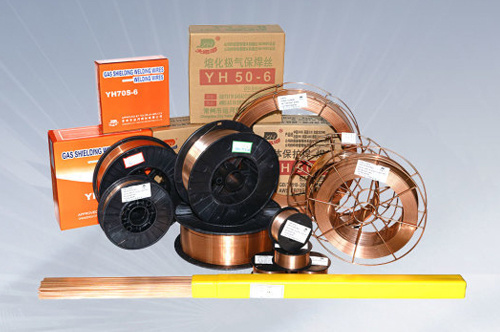
The quality of submerged arc welding wire is supported by precise manufacturing processes. High-purity raw materials are carefully selected, and stringent metallurgical controls ensure consistent chemical composition and mechanical performance. Dimensional accuracy of the wire is critical for smooth feeding and continuous welding operation, reducing interruptions and defects. Additionally, SAW wires are often supplied in spools compatible with automatic or semi-automatic welding equipment, facilitating high-volume production while maintaining consistent weld quality.
Environmental and safety considerations are also important in SAW applications. The submerged arc process produces minimal fumes and ultraviolet radiation exposure compared to other welding methods, and the granular flux used with the wire acts as a protective barrier for the operator and the weld pool. Proper selection of welding parameters, wire type, and flux ensures optimal performance while minimizing environmental impact and enhancing workplace safety.
In summary, submerged arc welding wire is an indispensable material for modern industrial welding. It combines high efficiency, deep penetration, consistent weld quality, and excellent mechanical properties to meet the demanding requirements of industries such as shipbuilding, construction, pipelines, and heavy machinery. By selecting the appropriate wire type and welding parameters, manufacturers can achieve superior welds with reduced labor, lower costs, and improved reliability. The ongoing development of SAW wires continues to expand their application range, ensuring that this technology remains a cornerstone of high-quality, high-productivity welding operations.


YUNHE WELDING MATERIAL

Share to


Information Subscription
Welcome to leave your message of interest, we will contact you soon
Yaoguan Town, Wujin District, Changzhou, Jiangsu, China
Copyright©2025 Changzhou City Yunhe Welding Material Co.,Ltd.