


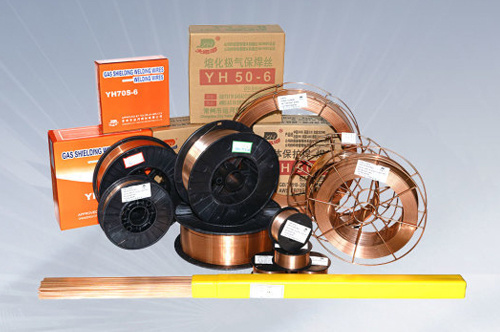
Why Choose CO2 Welding Wire for Your Next Project? Discover the Benefits and Best Practices
Release time:
2025-11-25
Why Choose CO2 Welding Wire for Your Next Project? Table of Contents 1. Introduction to CO2 Welding Wire 2. The Essential Benefits of CO2 Welding Wire 3. Types of CO2 Welding Wire 3.1 Solid CO2 Welding Wire 3.2 Flux-Cored CO2 Welding Wire 4. Comparing CO2 Welding Wire with Other Welding Wires 5. When to Use CO2 Welding Wire 6. Best Practices for Using CO2 Welding Wire 7. Frequently Asked Questions
Why Choose CO2 Welding Wire for Your Next Project?
Table of Contents
1. Introduction to CO2 Welding Wire
2. The Essential Benefits of CO2 Welding Wire
3. Types of CO2 Welding Wire
3.1 Solid CO2 Welding Wire
3.2 Flux-Cored CO2 Welding Wire
4. Comparing CO2 Welding Wire with Other Welding Wires
5. When to Use CO2 Welding Wire
6. Best Practices for Using CO2 Welding Wire
7. Frequently Asked Questions (FAQs)
8. Conclusion
1. Introduction to CO2 Welding Wire
CO2 welding wire, often utilized in gas metal arc welding (GMAW), is a popular choice among professionals and DIY enthusiasts alike. Known for its versatility and effectiveness, this welding wire uses carbon dioxide as a shielding gas, providing a clean and efficient welding process. In this article, we will delve deep into the benefits and applications of CO2 welding wire, helping you to understand why it may be the ideal choice for your next project.
2. The Essential Benefits of CO2 Welding Wire
Choosing the right welding wire is crucial for achieving high-quality results. Here are some key benefits of using CO2 welding wire:
2.1 Cost-Effectiveness
One of the standout features of CO2 welding wire is its affordability. CO2 is less expensive than other shielding gases, making this wire a cost-effective option for various projects. The reduced cost of materials allows you to allocate resources more efficiently without compromising on quality.
2.2 Superior Weld Quality
CO2 welding wire produces excellent weld quality with minimal spatter. This is due to the gas's ability to provide a stable arc and a good fusion between the base metals. The result is a clean, strong joint that can withstand considerable stress.
2.3 Versatility in Application
This welding wire is suitable for various applications, including automotive repairs, structural fabrication, and general manufacturing. Its adaptability makes it an excellent choice for both industrial and home projects.
2.4 Ease of Use
For those new to welding, CO2 welding wire is relatively easy to use. The process is straightforward, and the results can be achieved with a minimal learning curve. Even novice welders can produce quality welds with practice.
3. Types of CO2 Welding Wire
Understanding the different types of CO2 welding wire can help you select the best option for your specific needs. Here are the two primary types:
3.1 Solid CO2 Welding Wire
Solid CO2 welding wire is commonly used in GMAW applications. It provides a stable arc and is suitable for welding materials like mild steel. This type of wire is favored for its ease of use and excellent penetration.
3.2 Flux-Cored CO2 Welding Wire
Flux-cored CO2 welding wire is designed for use in situations where a shielding gas may be impractical. The wire contains a flux that generates its shielding gas during the welding process. This makes it ideal for outdoor welding applications or in windy conditions, where shielding gases can be blown away.
4. Comparing CO2 Welding Wire with Other Welding Wires
When considering CO2 welding wire, it's essential to compare it with other welding options to determine the best fit for your project. Here’s how it stacks up against other common welding wires:
4.1 CO2 vs. MIG Welding Wire
While both CO2 and MIG (Metal Inert Gas) welding wires are used in GMAW, CO2 wire is more affordable. MIG welding wires typically use a more costly inert gas, such as argon, which can increase overall project costs. However, MIG wires tend to offer better performance in terms of weld aesthetics and spatter control.
4.2 CO2 vs. Stick Welding Rods
Stick welding, or SMAW (Shielded Metal Arc Welding), uses consumable electrodes that melt and create a weld pool. While stick welding can be more versatile in outdoor settings, CO2 welding wire generally provides cleaner and stronger welds, making it preferable for many applications.
5. When to Use CO2 Welding Wire
CO2 welding wire is ideal for specific scenarios. Consider using it for:
5.1 Mild Steel Fabrication
It is particularly effective for welding mild steel, making it a go-to choice for many fabricators.
5.2 Automotive Repairs
CO2 welding wire excels in automotive applications due to its ability to provide strong, durable welds.
5.3 General Manufacturing
Whether you are working on machinery or structural components, CO2 welding wire is a versatile choice that can accommodate a variety of manufacturing needs.
6. Best Practices for Using CO2 Welding Wire
To achieve the best results with CO2 welding wire, consider the following best practices:
6.1 Proper Setup
Ensure your welding equipment is calibrated correctly, with the right voltage and wire feed speed. Refer to the wire manufacturer's guidelines for optimal settings.
6.2 Clean the Surface
Before welding, clean the base materials thoroughly. Remove any rust, grease, or contaminants to ensure a strong weld.
6.4 Practice Good Technique
Maintain a steady hand and consistent travel speed while welding. This will help produce uniform beads and minimize defects.
7. Frequently Asked Questions (FAQs)
7.1 What materials can I weld with CO2 welding wire?
You can primarily use CO2 welding wire to weld mild steel, but it can also work on other ferrous metals.
7.2 Is CO2 welding wire suitable for outdoor welding?
Yes, CO2 welding wire, especially in a flux-cored form, is suitable for outdoor welding, as it can withstand wind conditions.
7.3 How do I choose the right diameter of CO2 welding wire?
The diameter of the wire you choose depends on the thickness of the materials you are welding. Thicker materials require larger diameters.
7.4 What shielding gas should I use with CO2 welding wire?
Carbon dioxide is the primary shielding gas; however, you can also mix it with argon for improved arc stability and weld quality.
7.5 Can I use CO2 welding wire for aluminum welding?
No, CO2 welding wire is not suitable for aluminum. Use specific aluminum welding wires for such applications.
8. Conclusion
In summary, CO2 welding wire presents numerous advantages, making it an excellent choice for various welding projects. From its cost-effectiveness to superior weld quality, the benefits of using CO2 welding wire are significant. Understanding the types of CO2 welding wire, their applications, and best practices can enhance your welding experience. Whether you are a seasoned professional or a novice welder, incorporating CO2 welding wire into your toolkit can lead to successful and efficient project outcomes. Choose wisely and weld confidently!


YUNHE WELDING MATERIAL

Share to


Information Subscription
Welcome to leave your message of interest, we will contact you soon
Yaoguan Town, Wujin District, Changzhou, Jiangsu, China
Copyright©2025 Changzhou City Yunhe Welding Material Co.,Ltd.