


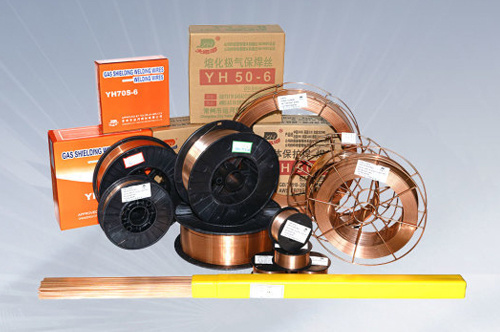
Comparing Carbon Steel Welding Wire with Other Welding Materials: An In-Depth Analysis
Release time:
2025-11-23
Comparing Carbon Steel Welding Wire with Other Welding Materials Table of Contents 1. Introduction to Welding Materials 2. Understanding Carbon Steel Welding Wire 3. Advantages of Carbon Steel Welding Wire 4. Overview of Other Welding Materials 4.1 Stainless Steel Welding Wire 4.2 Aluminum Welding Wire 4.3 Flux-Cored Welding Wire 5. Comparative Anal
Comparing Carbon Steel Welding Wire with Other Welding Materials
Table of Contents
- 1. Introduction to Welding Materials
- 2. Understanding Carbon Steel Welding Wire
- 3. Advantages of Carbon Steel Welding Wire
- 4. Overview of Other Welding Materials
- 5. Comparative Analysis: Carbon Steel vs. Other Materials
- 6. Cost-Effectiveness of Welding Materials
- 7. Application Suitability of Welding Wires
- 8. Frequently Asked Questions
- 9. Conclusion
1. Introduction to Welding Materials
Welding is a crucial industrial process used to join materials, primarily metals, through the application of heat and pressure. The choice of welding wire is vital as it influences the overall quality, strength, and durability of the weld. Among the various options available in the market, **carbon steel welding wire** is popular due to its unique properties. In this article, we delve into a comprehensive comparison of carbon steel welding wire with other welding materials, providing insights into their respective advantages, applications, and overall performance.
2. Understanding Carbon Steel Welding Wire
Carbon steel welding wire consists mainly of carbon and iron, with varying percentages of other elements. This composition contributes to its **strength**, **durability**, and **affordability**, making it a preferred choice for various welding applications. Carbon steel wires are commonly used in MIG welding processes, providing excellent arc stability and weld penetration.
2.1 Types of Carbon Steel Welding Wire
Carbon steel welding wire is available in several types, including:
- **ER70S-6**: A commonly used MIG welding wire that offers good weldability and is versatile for different applications.
- **E7018**: Often used in stick welding, this wire is known for its low hydrogen content, making it ideal for high-strength applications.
3. Advantages of Carbon Steel Welding Wire
Selecting carbon steel welding wire presents several advantages:
- **Strength and Durability**: Carbon steel offers high tensile strength, making it suitable for load-bearing applications.
- **Cost-Effectiveness**: Compared to other materials like stainless steel or aluminum, carbon steel welding wire is generally more affordable, making it accessible for various projects.
- **Weldability**: Carbon steel's properties facilitate easier welding, resulting in cleaner, high-quality welds.
- **Versatility**: Suitable for a wide range of applications, from industrial construction to automotive repairs.
4. Overview of Other Welding Materials
While carbon steel welding wire has distinct advantages, other welding materials also serve specific purposes and applications. Below, we explore some of these alternatives.
4.1 Stainless Steel Welding Wire
Stainless steel welding wire is known for its **corrosion resistance** and **aesthetic appeal**. It is commonly used in applications where rust prevention is critical, such as in food processing or marine environments. Key characteristics include:
- **Resistance to Oxidation**: Stainless steel maintains its integrity even in harsh environments.
- **Strength**: Offers excellent strength-to-weight ratio, making it suitable for structural applications.
4.2 Aluminum Welding Wire
Aluminum welding wire is lightweight and resistant to corrosion, making it perfect for industries such as aerospace and automotive. Key properties include:
- **Low Density**: Aluminum's lightweight nature contributes to fuel efficiency in vehicles.
- **Excellent Conductivity**: Ensures effective heat transfer, ideal for applications requiring rapid cooling.
4.3 Flux-Cored Welding Wire
Flux-cored welding wire is designed for environments where shielding gas is impractical. It provides self-shielding capabilities, making it ideal for outdoor applications. Key attributes include:
- **Versatile**: Can be used in various positions, providing flexibility in welding applications.
- **Reduced Need for Gas**: Minimizes the need for external shielding gases, leading to cost savings.
5. Comparative Analysis: Carbon Steel vs. Other Materials
When comparing carbon steel welding wire with other materials, several factors come into play:
5.1 Strength Comparison
Carbon steel generally offers superior strength compared to aluminum but may lag behind stainless steel in corrosive environments.
5.2 Weld Quality
Carbon steel welding wires typically produce high-quality welds with good penetration. However, stainless steel wires can lead to more aesthetically pleasing finishes in visible applications.
5.3 Corrosion Resistance
In environments prone to moisture or chemicals, stainless steel outperforms carbon steel. For applications requiring durability against corrosion, stainless steel is the better choice.
5.4 Cost Considerations
Carbon steel welding wire is often more cost-effective than both stainless steel and aluminum options, making it an attractive choice for budget-conscious projects.
6. Cost-Effectiveness of Welding Materials
When undertaking welding projects, **cost-effectiveness** is a significant factor. Carbon steel welding wire typically has a lower price point, making it ideal for large-scale projects or applications where budget constraints are a concern. In contrast, while stainless steel and aluminum wires offer specific advantages, their higher costs can limit their use in certain scenarios.
7. Application Suitability of Welding Wires
Choosing the right welding wire involves understanding the specific requirements of your project. Below are typical applications for each type of welding wire:
- **Carbon Steel Welding Wire**: Industrial construction, automotive repairs, and structural applications.
- **Stainless Steel Welding Wire**: Food processing, chemical processing, and marine applications.
- **Aluminum Welding Wire**: Aerospace, automotive, and lightweight structures.
- **Flux-Cored Welding Wire**: Heavy machinery, outdoor construction, and pipeline welding.
8. Frequently Asked Questions
8.1 What is the best welding wire for beginners?
Carbon steel welding wire, particularly ER70S-6, is recommended for beginners due to its ease of use and versatility.
8.2 How does carbon steel welding wire compare to stainless steel?
While carbon steel welding wire is cost-effective and strong, stainless steel offers superior corrosion resistance and a more polished finish.
8.3 Can I use carbon steel welding wire for aluminum welding?
No, carbon steel welding wire is not suitable for aluminum applications. Specific aluminum welding wire should be used for that purpose.
8.4 What are the advantages of flux-cored welding wire?
Flux-cored welding wire provides the flexibility of welding without the need for shielding gas and is suitable for outdoor applications.
8.5 Is carbon steel welding wire environmentally friendly?
Carbon steel is recyclable, and its production has a lower environmental impact compared to other metals, making it a more sustainable choice.
9. Conclusion
In conclusion, **carbon steel welding wire** is a robust and cost-effective option for various welding projects, especially when compared to alternatives like stainless steel and aluminum. Each material has its unique strengths and applications, making it essential to understand the specific needs of your project before making a selection. By evaluating factors like strength, weld quality, corrosion resistance, and cost, you can make informed decisions to achieve optimal results in your welding endeavors.


YUNHE WELDING MATERIAL

Share to


Information Subscription
Welcome to leave your message of interest, we will contact you soon
Yaoguan Town, Wujin District, Changzhou, Jiangsu, China
Copyright©2025 Changzhou City Yunhe Welding Material Co.,Ltd.